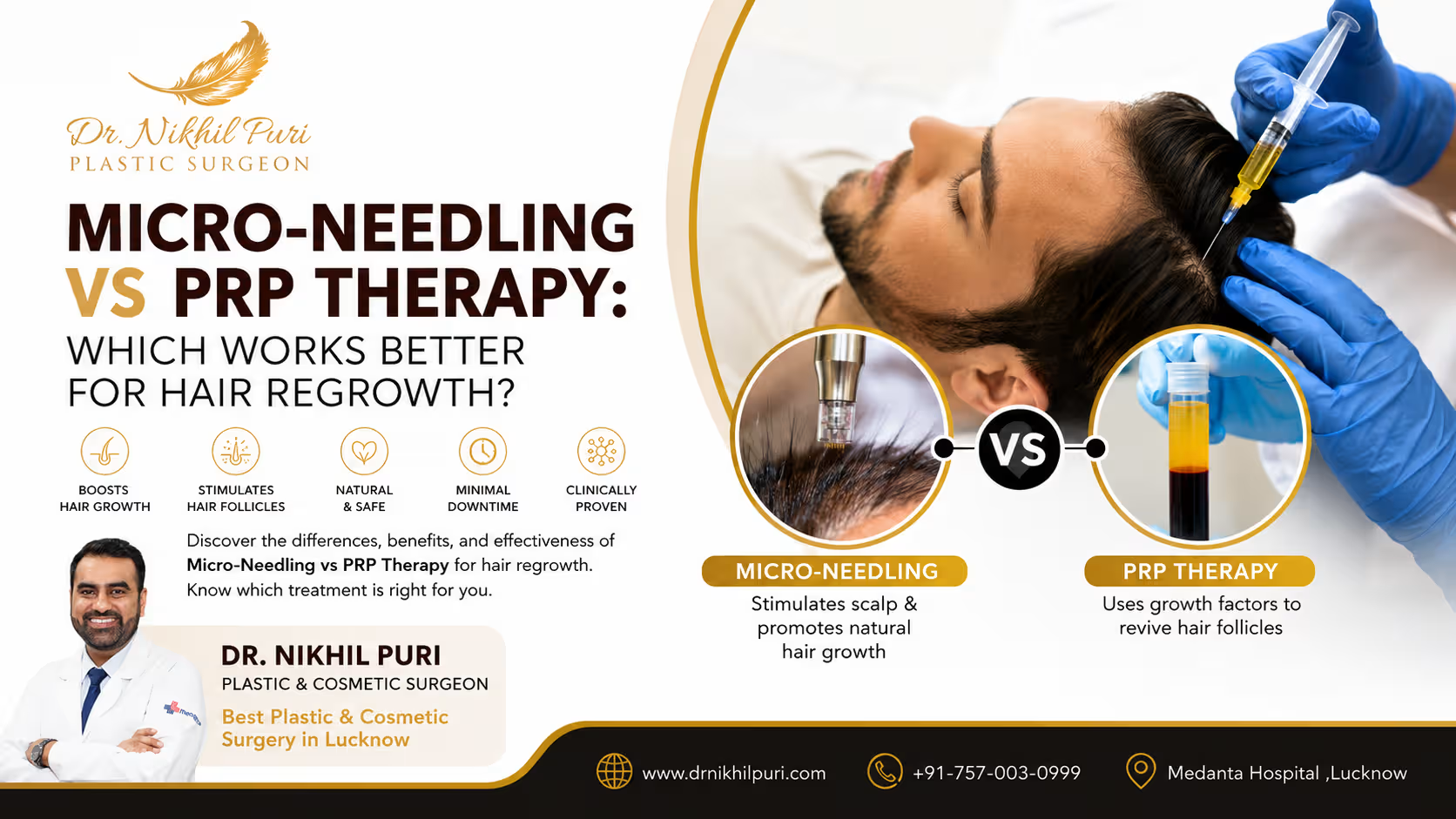
Hair loss is a journey that millions of men and women embark on, often unexpectedly. It starts with a few extra strands in the shower drain and can progress to visible thinning that affects how you see yourself in the mirror. In the past, the options were limited: either accept the loss or undergo invasive hair transplant surgery.
Today, the landscape of hair restoration has been transformed by regenerative medicine. Two of the most sought-after non-surgical treatments are Micro-Needling and Platelet-Rich Plasma (PRP) therapy. Both treatments promise to revitalize thinning hair, but they work in fundamentally different ways. This comprehensive guide explores the science, the results, and the nuances of Micro-Needling vs PRP Therapy to help you decide which path is right for your scalp.
“Micro-needling and PRP therapy are popular hair restoration treatments. While PRP uses growth factors from your own blood to stimulate hair follicles, micro-needling promotes scalp healing and follicle activation through controlled micro-injuries.”
Introduction: The Evolution of Hair Restoration
The rising cases of hair loss among both men and women have sparked a global demand for treatments that are not only effective but also minimally invasive. As we become more health-conscious, the focus has shifted toward treatments that utilize the body’s own healing potential.
This is where the debate between PRP and micro-needling begins. While both fall under the umbrella of “hair restoration treatment,” they are often compared because they both target the hair follicle at a cellular level. However, selecting the right treatment isn’t just about picking the most popular option; it’s about understanding the biology of your hair loss. Whether you are dealing with early thinning or more advanced pattern baldness, choosing between these therapies requires an evidence-based approach and expert guidance.
Understanding Hair Loss and Hair Regrowth
To understand how to fix hair loss, we must first understand how hair grows—and why it stops. Hair growth is not a continuous process; it happens in a cycle consisting of four distinct phases:
-
Anagen (Growth Phase): This is the active phase where hair cells divide rapidly. It can last anywhere from two to seven years.
-
Catagen (Transition Phase): A short phase (about 2–3 weeks) where the hair follicle shrinks and detaches from the blood supply.
-
Telogen (Resting Phase): The hair remains in the follicle but is not growing.
-
Exogen (Shedding Phase): The hair finally falls out, and the follicle begins the cycle again.
Common Causes of Hair Loss
-
Male Pattern Baldness (Androgenetic Alopecia): Caused by a sensitivity to Dihydrotestosterone (DHT), which shrinks the hair follicles until they stop producing hair.
-
Female Pattern Hair Loss: Usually presents as a widening part or overall thinning, often influenced by hormonal shifts.
-
Stress-Related Hair Shedding (Telogen Effluvium): Significant stress can push a large number of follicles into the resting phase simultaneously, leading to sudden shedding.
-
Scalp Inflammation: Conditions like seborrheic dermatitis can compromise follicle health.
Treatments like Micro-needling and PRP are designed to jumpstart follicles that have become stuck in the resting phase or have begun to miniaturize.
What Is Micro-Needling for Hair Regrowth?
Micro-needling, originally used for anti-aging skin treatments, has become a cornerstone of modern hair regrowth therapy. The procedure involves using a device—either a manual roller with fine needles or an automated “pen”—to create tiny, vertical punctures in the scalp.
How Micro-Needling Works
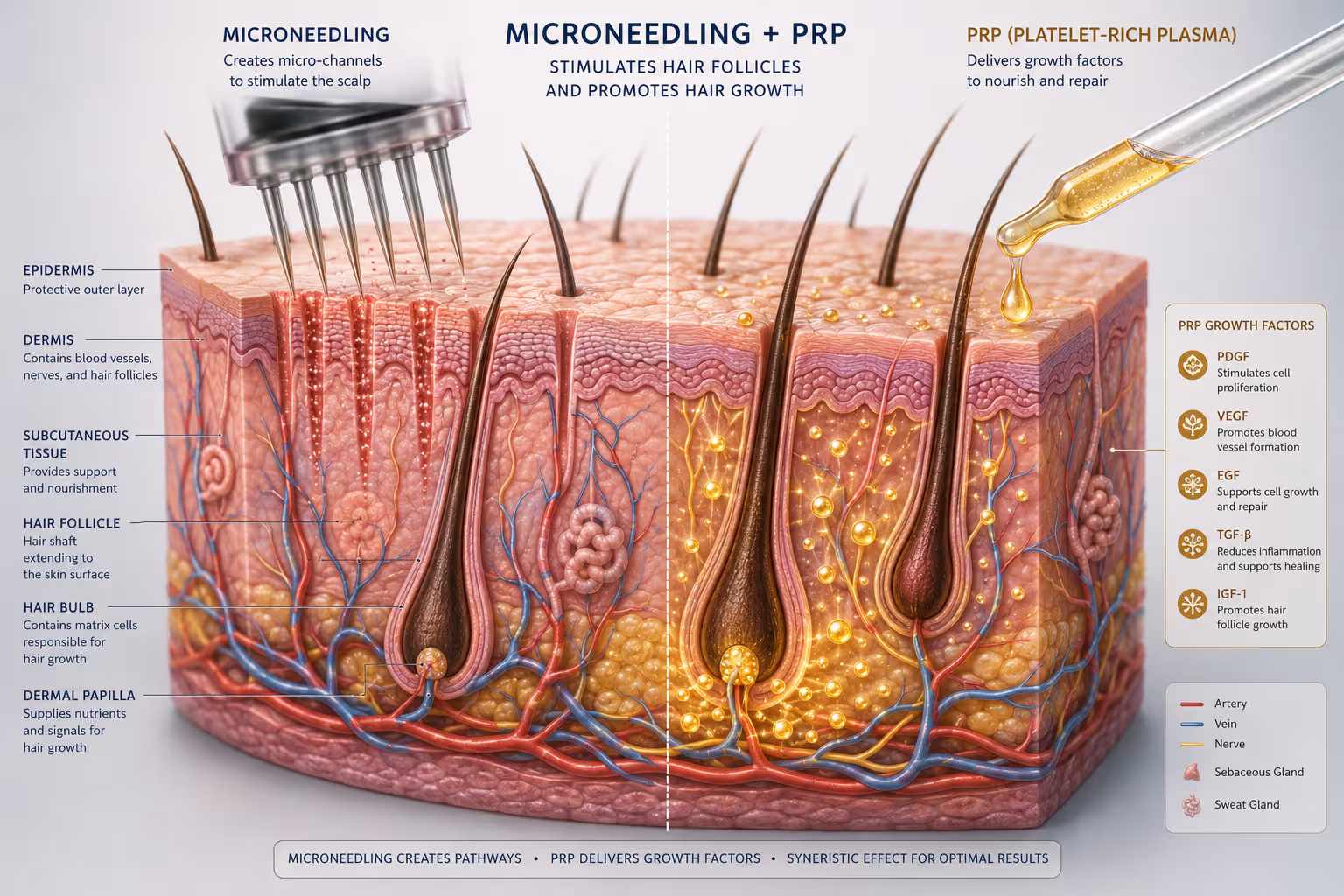
When these micro-needles penetrate the skin (usually at a depth of 0.5mm to 1.5mm), they create “controlled micro-injuries.” The body’s response to these injuries is three-fold:
-
Release of Healing Proteins: The body rushes platelets and plasma to the “wounded” area to begin the repair process.
-
Collagen Production: The scalp produces collagen and elastin to rebuild the tissue, which strengthens the skin around the hair follicle.
-
Stem Cell Stimulation: Research suggests that micro-injury to the follicle bulge area can activate stem cells, potentially triggering the transition from the resting phase to the growth phase.
What Is PRP Therapy for Hair Regrowth?
Platelet-Rich Plasma (PRP) therapy is often called “Liquid Gold” in the medical community. It is a biological therapy that leverages the concentrated healing power of your own blood.
What is Platelet-Rich Plasma?
Your blood contains platelets, which are known for clotting but are also “storage houses” for growth factors. These growth factors (including VEGF, PDGF, and TGF) are responsible for cell growth, tissue repair, and the formation of new blood vessels.
The Treatment Process
PRP therapy involves drawing a small amount of the patient’s blood and placing it in a centrifuge. The machine spins at high speeds to separate the plasma from the red blood cells. The resulting plasma, which has a platelet concentration 5 to 10 times higher than normal blood, is then injected directly into the thinning areas of the scalp. This delivers a potent dose of “fuel” directly to the hair roots.
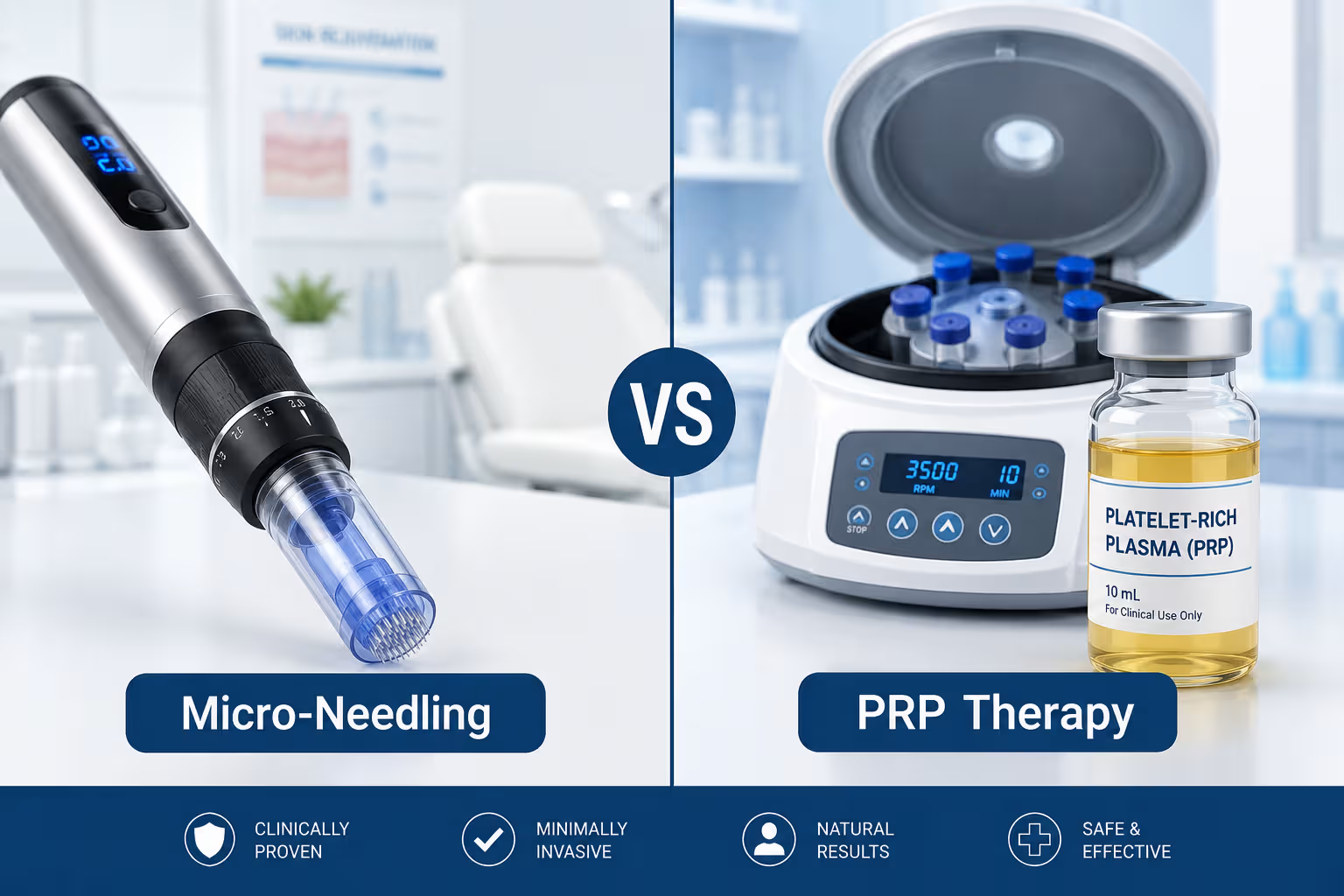
Micro-Needling vs PRP Therapy: How Do They Work Differently?
Understanding the difference between these two requires looking at their biological mechanisms.
-
Physical vs. Chemical Stimulation: Micro-needling is a mechanical or physical stimulant. It relies on the wound-healing response to produce results. PRP is a biological or chemical stimulant. It provides the actual ingredients (growth factors) needed for repair.
-
Target Depth: Micro-needling affects the epidermal and upper dermal layers. PRP injections reach the deeper dermal layer where the follicle bulb sits.
-
Treatment Goal: The goal of micro-needling is often to improve the scalp environment and enhance the absorption of topical treatments like Minoxidil. The goal of PRP is to biologically reverse the miniaturization of the hair follicle.
Step-by-Step: What Happens During a Micro-Needling Session?
If you decide to undergo micro-needling, here is what you can expect:
-
Step 1: Consultation: A thorough scalp examination is performed to check for inflammation or infection.
-
Step 2: Scalp Preparation: The scalp is thoroughly cleaned. In many cases, a topical numbing cream is applied for 30–45 minutes to minimize discomfort.
-
Step 3: The Procedure: The specialist uses a medical-grade micro-needling pen. The pen is moved across the treatment area, creating thousands of microscopic channels. You may feel a vibrating or “sandpaper” sensation.
-
Step 4: Post-Treatment Care: A soothing serum or a topical hair growth solution is applied. Because the channels are open, the serum penetrates much deeper than usual.
-
Step 5: Follow-Up: Most patients require a series of 6 to 10 sessions, spaced 3 to 4 weeks apart.
Step-by-Step: What Happens During a PRP Hair Therapy Session?
PRP is a more clinical procedure and follows these steps:
-
Step 1: Blood Collection: A small sample of blood (roughly 10ml to 20ml) is taken from your arm, just like a standard blood test.
-
Step 2: PRP Separation: The blood is placed in a specialized centrifuge. Over 10–15 minutes, the blood separates into layers. The gold-colored plasma is carefully extracted.
-
Step 3: Scalp Injection: Using a very fine needle, the specialist performs a series of injections across the thinning regions of the scalp.
-
Step 4: Recovery: Once the injections are complete, the scalp is cleaned. There are no bandages required, and you can usually drive yourself home immediately.
-
Step 5: Maintenance Sessions: An initial protocol usually involves 3 to 4 sessions, followed by a maintenance session every 6 months to 1 year.
Benefits of Micro-Needling for Hair Regrowth
-
Improved Blood Circulation: The micro-injuries stimulate local blood flow, ensuring follicles receive oxygen and nutrients.
-
Enhanced Absorption: It is the best way to make topical “hair fall treatments” work better. Without micro-needling, much of your topical serum stays on the surface of the skin.
-
Collagen Stimulation: It improves the overall health and “thickness” of the scalp skin.
-
Minimal Downtime: You might have some redness (similar to a mild sunburn) for 24 hours, but that is it.
-
Cost-Effectiveness: It is generally the more affordable of the two professional treatments.
Benefits of PRP Therapy for Hair Regrowth
-
Natural and Safe: Because it uses your own blood, there is no risk of allergic reaction or side effects from foreign substances.
-
Reduced Hair Shedding: PRP is incredibly effective at “stabilizing” hair loss, meaning it stops the active shedding phase quickly.
-
Improved Hair Thickness: PRP doesn’t just grow “new” hair; it makes your existing hair shafts thicker and stronger.
-
Density Improvement: By reviving dormant follicles, it increases the number of active hairs per square centimeter.
-
Minimal Invasiveness: While it involves injections, it requires no incisions, no stitches, and leaves no scars.
Which Treatment Produces Better Results?
When we look at the scientific evidence, PRP Therapy often shows a more significant increase in hair count and hair diameter in clinical trials for Androgenetic Alopecia. A study in the Journal of Cosmetic Dermatology found that PRP showed superior results in terms of patient satisfaction and hair density compared to basic micro-needling.
However, “better” is subjective. If a patient is using a potent topical treatment, micro-needling might be “better” for them because it ensures that medication actually reaches the follicle.
For many patients at the Best Plastic & Cosmetic Surgery in Lucknow, the most successful results come from Combination Therapy. By using micro-needling to create the channels and then applying or injecting PRP, you get the benefits of both mechanical and biological stimulation.
Micro-Needling vs PRP Therapy Comparison Chart
| Feature | Micro-Needling | PRP Therapy |
| Primary Goal | Scalp stimulation & absorption | Follicle rejuvenation |
| Procedure | Needle roller/pen on the surface | Injections into the dermis |
| Pain Level | Low to Moderate (Prickling) | Moderate (Pinch of injection) |
| Downtime | 12–24 hours of redness | 0–12 hours of minor swelling |
| Typical Sessions | 6 to 10 | 3 to 4 (initial) |
| Results Timeline | 3 to 6 months | 3 to 6 months |
| Ideal Candidate | Early thinning, budget-conscious | Pattern baldness, seeking density |
| Cost | Generally Lower | Generally Higher |
Note: Individual experiences may vary based on the extent of hair loss and the body’s natural healing capacity.
Who Is the Ideal Candidate?
Ideal Candidate for Micro-Needling:
-
You are in the very early stages of hair thinning.
-
You want to maximize the results of Minoxidil or other topical serums.
-
You are looking for a preventative measure to keep your scalp healthy.
-
You prefer a treatment that doesn’t involve drawing blood.
Ideal Candidate for PRP Therapy:
-
You have visible scalp “show-through” or a receding hairline.
-
You are suffering from pattern baldness (genetic hair loss).
-
You have undergone a hair transplant and want to support the growth of the new grafts.
-
You want a treatment that targets the biological cause of follicle shrinking.
Can PRP and Micro-Needling Be Combined?
Yes, and this is rapidly becoming the industry standard for non-surgical hair restoration.
In a combination protocol, the specialist first performs micro-needling to prepare the scalp. The PRP is then either injected or “massaged” into the micro-channels. This creates a synergistic effect:
-
The micro-needles trigger the initial healing response and open the pathways.
-
The PRP provides the high-octane growth factors that the body uses to complete that healing and “reboot” the hair follicles.
Clinical evidence suggests that the combination of these two leads to higher hair density and faster results than either treatment could achieve on its own.
Risks, Side Effects, and Safety Considerations
Both treatments are considered very safe, but they do have minor side effects:
Micro-Needling Side Effects:
-
Temporary redness and minor swelling.
-
A feeling of “tightness” in the scalp for a day.
-
Very rarely, minor bruising or pinpoint bleeding.
PRP Therapy Side Effects:
-
Mild soreness at the injection sites.
-
Temporary “fullness” or pressure in the scalp.
-
Very low risk of bruising.
Contraindications (When to Avoid):
You should avoid these treatments if you have an active scalp infection (like ringworm), uncontrolled diabetes, or blood-clotting disorders. Always consult a medical professional to ensure you are a safe candidate.
Recovery Timeline and Expected Results
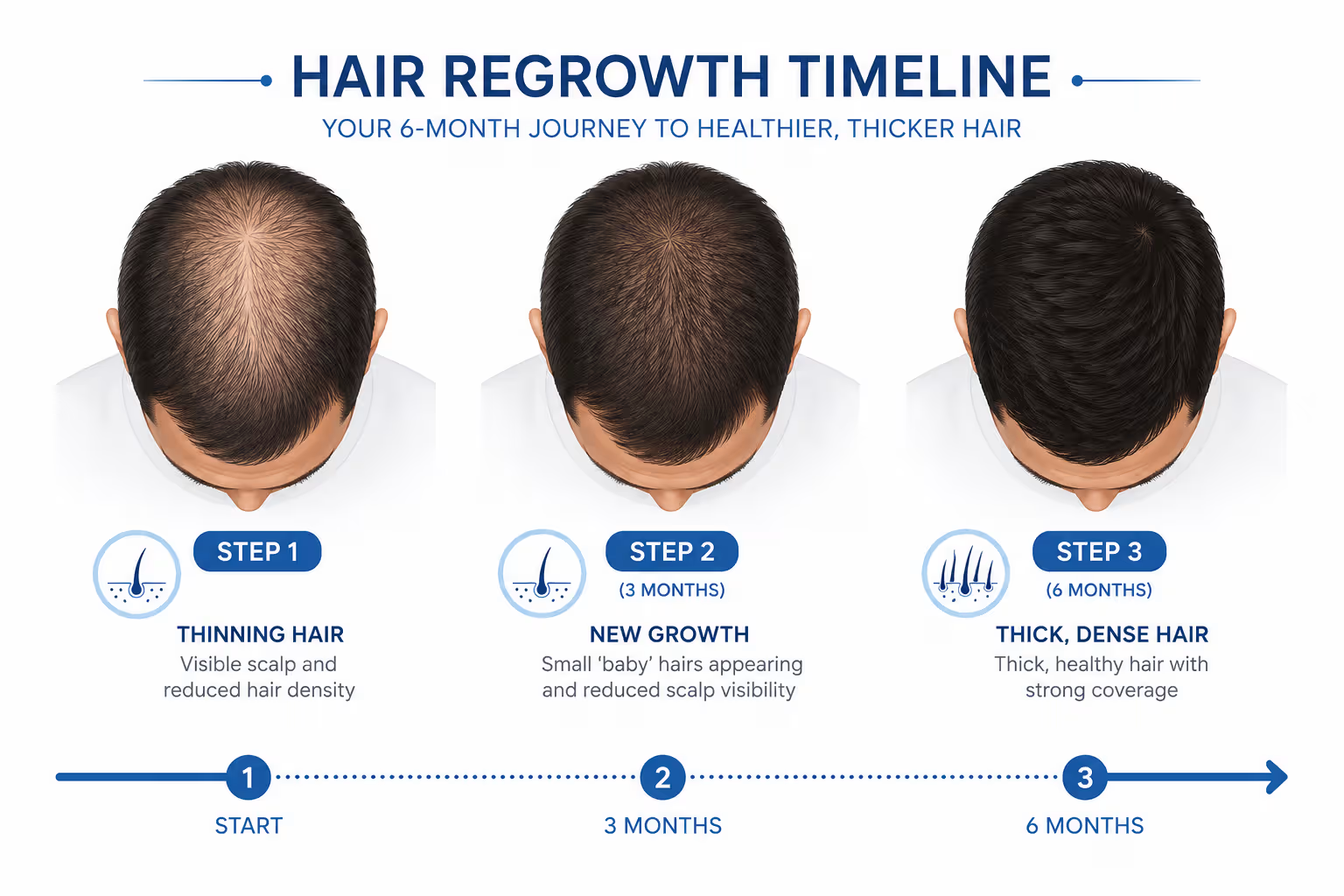
The journey to hair regrowth is a marathon, not a sprint. Here is a realistic timeline:
-
Week 1: The scalp heals from the procedure. Any redness or tenderness disappears.
-
Month 1: You likely won’t see “new” hair yet, but many patients notice that their daily hair shedding begins to slow down.
-
Month 3: This is usually when the first “vellus” hairs (fine, baby hairs) appear in the treatment areas.
-
Month 6: The new hairs become darker and thicker. This is often the stage where friends and family begin to notice the improvement in your hair density.
-
Long-Term: Because the causes of hair loss (like genetics) are constant, you will need maintenance sessions (once or twice a year) to keep the follicles active.
Common Myths and Facts About Hair Regrowth Treatments
Myth 1: PRP Can Grow Hair on a Completely Bald, Shiny Head.
-
Fact: PRP and micro-needling require a living hair follicle to work. If an area has been bald for many years and the skin is shiny/scarred, the follicles are likely dead, and a hair transplant is the only option.
Myth 2: One Session Is All You Need.
-
Fact: Biological change takes time. You need a series of sessions to “reset” the hair growth cycle.
Myth 3: Micro-Needling Results are Instant.
-
Fact: It takes months for the collagen to build and for the hair follicle to produce a visible hair shaft.
Myth 4: These Treatments Work for Everyone.
-
Fact: Success depends on the cause of hair loss. While most see improvement, those with certain autoimmune conditions may not respond as well.
Myth 5: Results Are Permanent.
-
Fact: Hair loss is a progressive condition. These treatments manage the condition, but they do not “cure” the underlying genetic tendency to lose hair.
When Should You Consult a Hair Restoration Specialist?
If you are noticing a receding hairline, a widening part, or general thinning, the best time to act is now. The “golden rule” of hair restoration is that it is much easier to keep the hair you have than to grow it back once it’s gone.
For those in Northern India, consulting an expert like Dr Nikhil Puri is a vital first step. At the Best Plastic & Cosmetic Surgery in Lucknow, patients receive a comprehensive evaluation to determine the specific “why” behind their hair loss. Dr Nikhil Puri specializes in tailoring these advanced treatments—whether it’s PRP, Micro-needling, or a combination—to the individual’s scalp needs and long-term goals.
Final Thoughts
In the comparison of Micro-Needling vs PRP Therapy, there is no single “winner.” Micro-needling is a fantastic, accessible way to stimulate the scalp and enhance topical treatments. PRP therapy is a more intensive, biological intervention that provides deeper rejuvenation for thinning follicles.
The most effective approach often involves a personalized plan that may include both. By combining the mechanical stimulation of micro-needling with the biological power of PRP, you give your hair the best possible chance to grow back thicker, stronger, and healthier.
Frequently Asked Questions
1. Which is better for hair regrowth, PRP or micro-needling?
PRP is typically more effective for genetic pattern baldness because it delivers growth factors directly to the follicle. Micro-needling is excellent for early thinning and improving the absorption of hair growth serums.
2. Can PRP regrow lost hair?
It can revive thinning and dormant follicles, making them produce thicker hair again. However, it cannot regrow hair in areas where the follicles have completely died out.
3. Does micro-needling work for hair thinning?
Yes. It stimulates blood flow and triggers a healing response that can help strengthen thinning hair and improve scalp health.
4. How many PRP sessions are required?
Most specialists recommend an initial series of 3 to 4 sessions, spaced one month apart, followed by maintenance every 6 to 12 months.
5. Is PRP therapy painful?
The procedure involves injections, which can cause a pinching sensation. Most clinics use numbing agents or cooling devices to make the experience very comfortable.
6. Can PRP and micro-needling be combined?
Yes. Combining them is a highly effective way to treat hair loss, as the micro-needling creates channels that allow the PRP to work more effectively.
7. How long does it take to see results?
Most patients begin to see a visible improvement in hair density and texture between 3 and 6 months after starting the treatment.
8. Are PRP results permanent?
No. Since genetic hair loss is a lifelong process, you will likely need maintenance sessions once or twice a year to keep the results.
9. Who is the best candidate for these treatments?
Individuals experiencing early to moderate hair thinning who still have active hair follicles.
10. When should I consult a specialist for hair loss?
You should consult a specialist as soon as you notice persistent thinning or excessive shedding. Early intervention with an expert like Dr Nikhil Puri is the key to successful hair restoration.
Hair loss can affect confidence, but modern non-surgical treatments offer promising solutions. Understanding the differences between Micro-Needling vs PRP Therapy can help you make an informed decision about your hair restoration journey.
For a personalized treatment plan and expert guidance, consult Dr Nikhil Puri, known for providing advanced solutions in the Best Plastic & Cosmetic Surgery in Lucknow, and explore the most suitable hair regrowth treatment for your needs.