Why Some Cosmetic Surgeries Fail (And How You Can Avoid the Same Mistakes)
Choosing to undergo cosmetic surgery is a life-changing decision. It is an investment in your self-esteem, your body, and your future. However, one question often lingers in a patient’s mind: “What if I don’t like the results?”
While the vast majority of co
smetic procedures are successful and transformative, “failed” surgeries do occur. Understanding why these setbacks happen is the first step toward ensuring your own journey is safe and successful. It isn’t about fear—it’s about being an empowered and informed patient.
👉 Why do some cosmetic surgeries fail?
Some cosmetic surgeries fail because of poor surgical planning, unrealistic expectations, choosing inexperienced surgeons, or ignoring recovery instructions. Successful cosmetic surgery depends on personalized treatment planning, realistic goals, proper healing, and the expertise of a qualified plastic surgeon. Avoiding these common pitfalls requires choosing board-certified specialists who prioritize patient safety over aesthetic trends.
Table of Contents
-
What Does “Failed Cosmetic Surgery” Actually Mean?
-
Choosing the Wrong Surgeon
-
Unrealistic Expectations Create Real Dissatisfaction
-
The Wrong Procedure for the Wrong Problem
-
Poor Surgical Planning
-
Ignoring Recovery Instructions
-
Healing Is Different for Every Person
-
Emotional Adjustment Is Also Part of Recovery
-
Cost-Cutting Often Leads to Compromise
-
Common Signs of Poor Cosmetic Surgery Planning
-
Cosmetic Surgery Myths vs Facts
-
Questions You Should Ask Before Cosmetic Surgery
-
Can Failed Cosmetic Surgery Be Corrected?
-
Final Thoughts
-
FAQs
1. What Does “Failed Cosmetic Surgery” Actually Mean?
In the world of aesthetic medicine, “failure” is a broad and often misunderstood term. To a surgeon, a failure might mean a medical complication, such as a hematoma or an infection. To a patient, a failure might be an aesthetic result that simply doesn’t feel “right.”
It is vital to distinguish between a medical complication and subjective dissatisfaction. A surgery can be technically perfect—the incisions are clean, the anatomy is intact—but if the patient’s vision wasn’t aligned with the surgeon’s, the patient might perceive it as a failure.
Social media has complicated this further. We are constantly exposed to “perfect” images that are the product of filters, lighting, and even AI. When real-life healing doesn’t match these digital illusions, patients feel let down.
True success is when a patient feels healthier and more confident. It’s about a refreshed version of yourself, not becoming a different person altogether. As the Best Cosmetic surgeon in Lucknow, my goal is always to bridge the gap between medical safety and your personal aesthetic goals.
2. Choosing the Wrong Surgeon
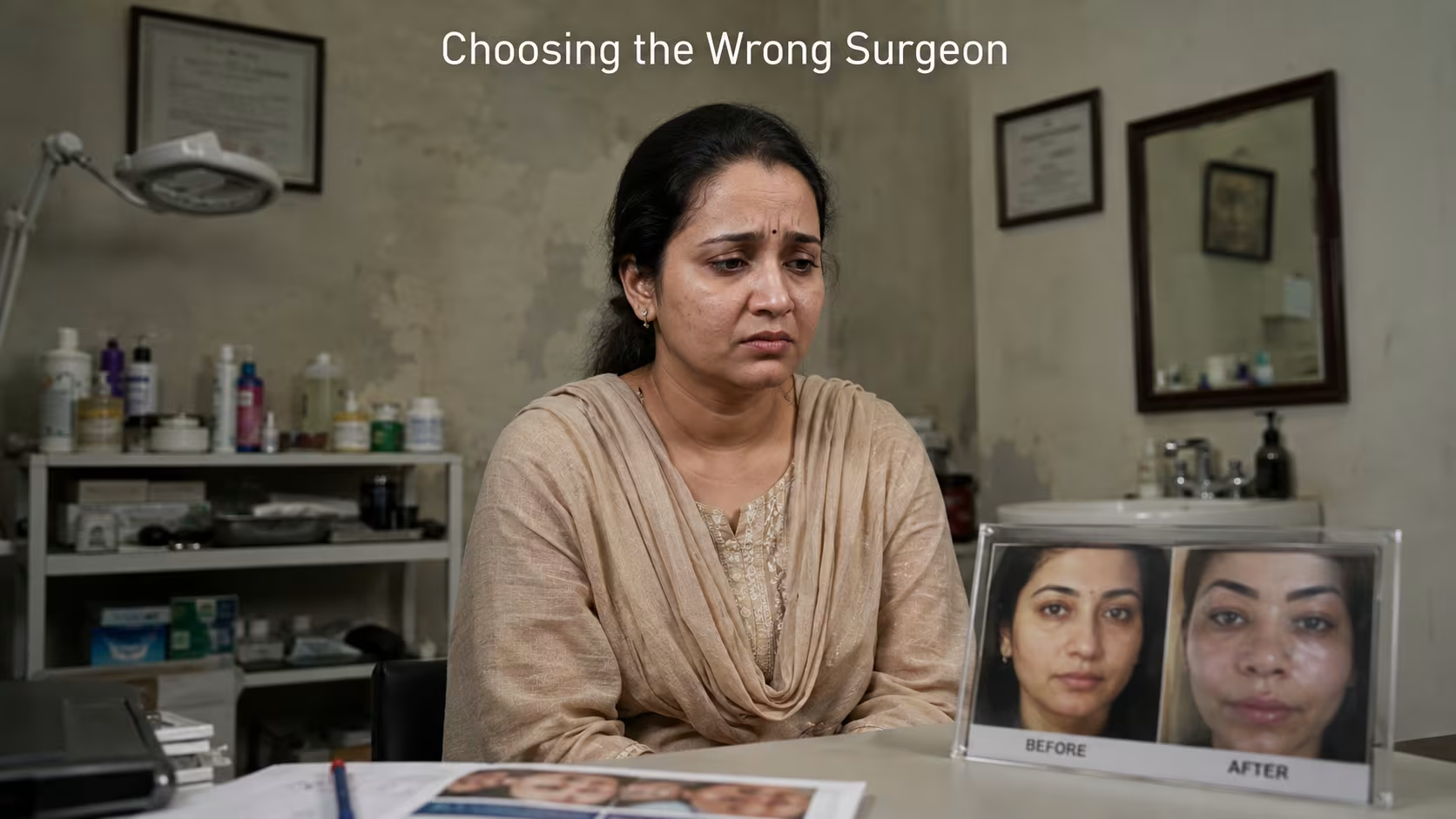
The single most critical factor in your surgical journey is the person holding the scalpel. Unfortunately, because cosmetic surgery is popular, many doctors without specialized training have started offering these services.
Choosing an experienced Best Cosmetic surgeon in Lucknow can significantly reduce risks and improve surgical outcomes. A specialized plastic surgeon has undergone years of rigorous training specifically focused on the anatomy of the face and body. They understand the layers of skin, fat, and muscle in a way that a general practitioner simply cannot.
Social media marketing can often be a “trap.” A beautiful Instagram feed does not necessarily mean the surgeon has the technical skill to handle a complex case. Always check for board certifications, hospital affiliations, and real patient testimonials.
When you choose a Best Plastic surgeon in Lucknow, you aren’t just paying for the surgery; you are paying for the surgeon’s ability to prevent complications and their expertise in managing them if they occur. This expertise is what keeps “minor issues” from becoming “failed surgeries.”
3. Unrealistic Expectations Create Real Dissatisfaction
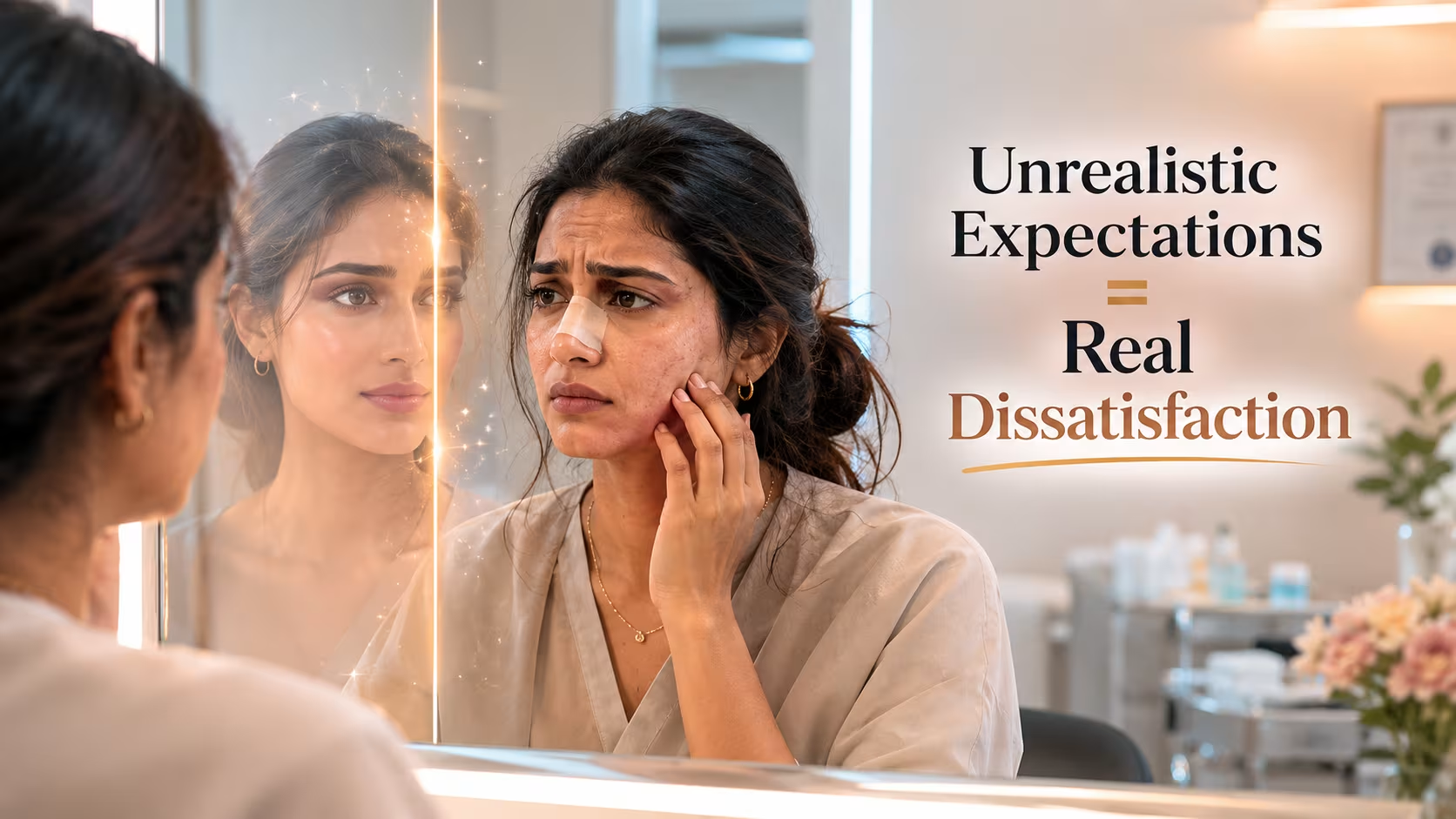
We often hear patients say, “I want to look like this celebrity.” While photos can be a helpful guide, they can also be a recipe for disappointment. Every human body is anatomically unique.
Your bone structure, skin thickness, and healing capacity are yours alone. A nose that looks great on a movie star might not function or look right on your face. When expectations are rooted in digital filters rather than biological reality, dissatisfaction is almost guaranteed.
Psychological factors also play a role. Some people believe that surgery will solve deep-seated emotional or relationship issues. When those problems persist after surgery, they often blame the surgical result.
Ethical surgeons, like Dr. Nikhil Puri, prioritize “expectation management.” During your consultation, we discuss what is biologically possible. Honest communication is the foundation of a successful outcome.
4. The Wrong Procedure for the Wrong Problem
Sometimes, the “failure” isn’t in how the surgery was done, but in which surgery was chosen. This usually happens when a consultation is too brief or the surgeon lacks diagnostic depth.
Common Examples:
-
The Filler Trap: Using too much filler to “lift” a face when what the patient actually needs is a surgical facelift. This leads to an unnatural, “puffy” look.
-
Liposuction Limits: Attempting to use liposuction to fix sagging skin. Liposuction removes fat; it doesn’t tighten skin. A tummy tuck would have been the correct choice.
-
Rhinoplasty vs. Breathing: Focusing only on the outside of the nose while ignoring internal breathing structures.
A personalized consultation is the only way to avoid this. A surgeon must evaluate your skin quality and skeletal support before recommending a plan. This ensures the procedure actually fixes the root of the problem.
📊 5. Cosmetic Surgery Success vs Failure Factors
| Better Outcomes | Higher Risk Outcomes |
| Qualified, specialized surgeon | Inexperienced or general provider |
| Realistic, anatomy-based goals | Unrealistic social media expectations |
| Strict adherence to aftercare | Ignoring or rushing recovery rules |
| Customized surgical “blueprint.” | One-size-fits-all “package” deals |
| Transparent risk counseling | Hidden risks and “guaranteed” results |
6. Poor Surgical Planning
A successful surgery is 70% planning and 30% execution. If the “blueprint” is wrong, the result will not stand. Poor planning involves failing to account for skin elasticity, existing scars, or underlying health conditions.
Patients consulting Dr. Nikhil Puri, known as a trusted Best Plastic surgeon in Lucknow, benefit from personalized surgical planning. This involves detailed measurements and a deep dive into the patient’s medical history.
Are your blood sugar levels stable? Do you have a history of keloid scarring? How will your skin drape over a new implant? If these questions aren’t answered before the first incision, the risk of a “failed cosmetic surgery” increases exponentially.
7. Ignoring Recovery Instructions
The surgeon’s job ends in the operating room, but your job begins the moment you wake up. A “perfect” surgery can be ruined by poor aftercare.
The Most Common Recovery Mistakes:
-
Smoking: This is the #1 enemy. Nicotine narrows blood vessels, which can cause skin to die and scars to open.
-
Rushing back to the gym: High blood pressure from exercise can cause internal bleeding (hematomas).
-
Poor Sleeping Positions: Putting pressure on a new nose or breast implant can shift the results permanently.
-
Skipping Follow-ups: Surgeons need to see you to catch small issues before they become permanent problems.
Recovery is a commitment. If you aren’t ready to follow the rules for 2-4 weeks, you aren’t ready for surgery.
8. Healing Is Different for Every Person
Biology is not always predictable. Two people can have the exact same procedure, and their bodies will react differently.
Factors like age, genetics, and even the climate of Lucknow can affect how you scar and how long you stay swollen. Some patients are “swellers”—their bodies hold onto fluid for months. If these patients compare themselves to someone who healed in two weeks, they may feel their surgery has failed.
Patience is a requirement. Most cosmetic results take a full year to “settle.” The nose or body you see at one month is not the final result.
9. Emotional Adjustment Is Also Part of Recovery
The “Post-Op Blues” are a real phenomenon. The combination of anesthesia, physical discomfort, and seeing yourself bruised in the mirror can lead to temporary depression or regret.
During this phase, many patients “panic-search” the internet and decide their surgery was a mistake. They may even seek a second surgeon too early.
Understanding that the “swollen phase” of healing is normal is crucial. Emotional resilience is just as important as physical health when navigating a cosmetic journey.
10. Cost-Cutting Often Leads to Compromise
We all love a good deal, but cosmetic surgery is not the place to “bargain hunt.” When a clinic offers prices significantly lower than the market average, they are likely cutting corners.
These compromises might include:
-
Using cheaper, non-certified implants.
-
Operating in a clinic that isn’t fully equipped for emergencies.
-
Not having a dedicated, qualified anesthesiologist.
-
Rushing the consultation and follow-up process.
The cost of “fixing” a failed surgery is often triple the cost of doing it right the first time. Safety has a price, and it is a price worth paying for your long-term health.
Common Signs of Poor Cosmetic Surgery Planning
Watch for these red flags during your consultation:
-
The “Yes-Man” Surgeon: They agree to everything you ask without discussing limitations.
-
No Risk Discussion: If they say “there are no risks,” they aren’t being honest.
-
Poor Pre-Op Instructions: If they don’t tell you to stop certain medications or smoking.
-
Rushed Consultations: You spend more time with a salesperson than the actual doctor.
-
No Before/After Portfolio: They cannot show you consistent work on real patients.
12. Cosmetic Surgery Myths vs Facts
| Myth | Fact |
| Cosmetic surgery is always risk-free | Every surgery has risks; expertise manages them. |
| Cheap surgery gives the same results | Safety and high-quality materials cost more for a reason. |
| Recovery is instant | Full healing of tissues takes 6 to 12 months. |
| You can choose anyone’s nose | Your unique anatomy dictates what is safe and possible. |
13. Questions You Should Ask Before Cosmetic Surgery
Use this checklist to ensure you are making a safe choice:
-
Are you board-certified in Plastic and Reconstructive Surgery?
-
How many times have you performed this specific procedure?
-
Where is the surgery performed, and is the facility accredited?
-
What is the most common complication for this surgery, and how do you handle it?
-
What happens if I am unhappy with the result?
-
Can I see “Before & After” photos of patients with a similar body type as mine?
14. Can Failed Cosmetic Surgery Be Corrected?
In the vast majority of cases, the answer is Yes. This is known as Revision Surgery.
Revision surgery is a specialized field. It requires a surgeon who understands how to work around scar tissue and how to restore anatomy that has been altered. However, you must be patient. Most surgeons will require you to wait at least 6 to 12 months for the tissues to soften before they can safely “fix” a previous result.
Correction is not just about physical changes; it’s about restoring the confidence that was lost during the first experience.
15. Final Thoughts
Cosmetic surgery can be a beautiful, life-enhancing experience when approached with care and respect for the medical process. By choosing a qualified surgeon, setting realistic goals, and committing to your recovery, you can avoid the common mistakes that lead to failure.
Success is built on a foundation of expert planning, realistic goals, and disciplined recovery. Your face and body are your most precious assets—treat them with the care they deserve by choosing excellence over convenience.
FAQs
1. Why do some cosmetic surgeries fail?
The main reasons are inexperienced surgeons, poor procedure choice, unrealistic expectations, and the patient not following recovery rules.
2. How can I avoid bad cosmetic surgery results?
The best way is to choose a board-certified plastic surgeon, be honest about your health history, and follow all aftercare instructions.
3. What is the biggest cosmetic surgery mistake?
Choosing a surgeon based on the lowest price rather than their qualifications and surgical experience.
4. Can failed cosmetic surgery be corrected?
Yes, revision surgery can fix most issues, but it is more complex and requires a highly skilled expert.
5. How do I choose the right plastic surgeon in Lucknow?
Look for surgeons like Dr. Nikhil Puri who have specialized M.Ch or DNB degrees, operate in accredited hospitals, and provide clear, honest consultations.
6. Is it normal to feel regret right after surgery?
Yes, “post-op blues” are common due to swelling, bruising, and the physical stress of healing. It usually fades as the results appear.
7. How important is smoking in surgical failure?
Smoking is a major cause of failure. It slows healing and can cause permanent scarring or tissue death.
8. Are cosmetic surgery complications common?
Serious complications are rare when the surgery is performed by a qualified specialist in a sterile, modern hospital.
9. How long does it take to see final results?
Most procedures take 6 to 12 months for the final shape to settle and for scars to mature.
10. Should I trust social media reviews for surgeons?
Social media is a good starting point, but always verify credentials through official boards and a face-to-face meeting.
CTA
Cosmetic surgery can improve confidence and quality of life when performed safely with proper planning and realistic expectations. Choosing the right surgeon is one of the most important decisions for achieving natural and satisfying results.
Consult Dr. Nikhil Puri, a trusted Best Cosmetic surgeon in Lucknow, for safe, ethical, and personalized cosmetic surgery guidance.
Schedule your consultation today and prioritize your safety and beauty.