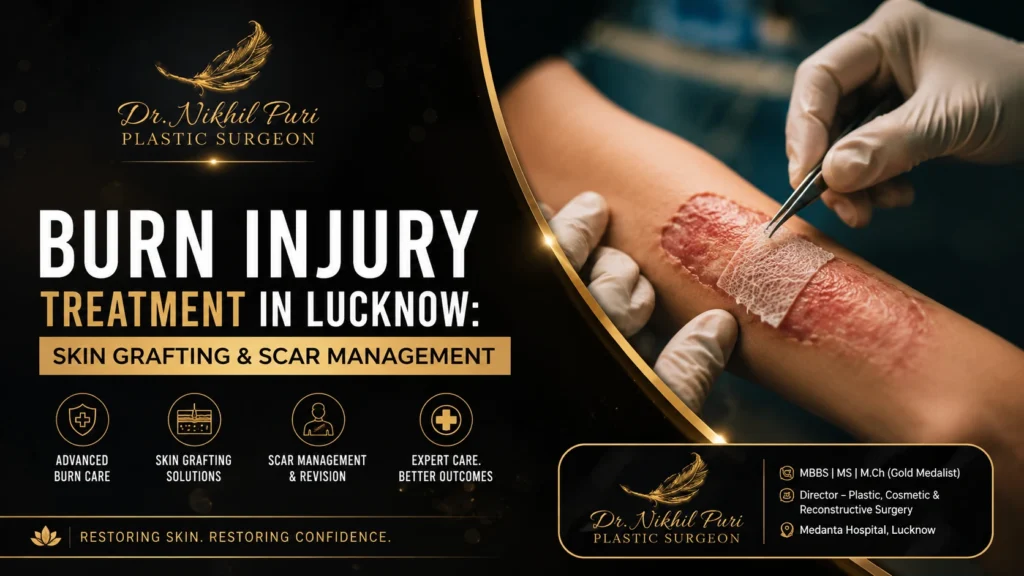
Burn injuries can be physically painful and emotionally distressing. Depending on the depth and extent of the burn, they may affect the skin, underlying tissues, movement, appearance, and overall quality of life. While minor burns may heal with appropriate first aid and medical care, deeper or extensive burns often require specialist treatment to support healing, reduce complications, and improve long-term function and appearance.
For patients seeking burn injury treatment in Lucknow, understanding available treatment options—including wound care, skin grafting, scar management, and reconstructive procedures—can help in making informed decisions.
Dr. Nikhil Puri, a plastic, cosmetic and reconstructive surgeon in Lucknow, provides specialist evaluation and surgical management for complex wounds, burn-related deformities, scars, and reconstructive needs.
What Is a Burn Injury?
A burn is an injury to the skin or deeper tissues caused by heat, flames, hot liquids, chemicals, electricity, friction, or other sources of energy. Burns can range from superficial redness to deep tissue destruction.
The severity of a burn depends on several factors, including:
- Depth of the burn
- Size or percentage of the body affected
- Location of the injury
- Cause of the burn
- Patient’s age and general health
- Presence of infection or other injuries
Burns involving the face, hands, feet, joints, genitals, or major body areas require particularly careful assessment because they can affect important functions as well as appearance.
Understanding Different Degrees of Burns
Burns are commonly classified according to their depth.
Superficial Burns
These affect the outermost layer of skin. The area may appear red, painful, and dry. Many superficial burns heal without surgery and generally have a lower risk of permanent scarring.
Partial-Thickness Burns
These involve deeper layers of the skin. They may cause redness, swelling, significant pain, and blisters. Depending on their depth, some partial-thickness burns can heal naturally, while deeper injuries may require surgical treatment.
Full-Thickness Burns
These burns destroy the full thickness of the skin and may extend into deeper tissues. The injured area may appear white, brown, black, or leathery. Because the skin may not be able to heal adequately on its own, surgical treatment such as excision and skin grafting may be necessary.
Deep or Complex Burns
Severe burns can damage muscles, tendons, nerves, blood vessels, or other structures. Such injuries may require advanced reconstructive surgery and, in some cases, multiple procedures.
What Should You Do Immediately After a Burn?
Immediate first aid can help limit further tissue damage.
For a minor thermal burn:
- Move away from the source of heat.
- Cool the affected area under cool running water for approximately 20 minutes when practical.
- Remove jewellery or tight clothing near the injured area before swelling develops, provided it is not stuck to the skin.
- Cover the burn loosely with a clean, non-stick dressing or clean cloth.
- Seek medical evaluation when the burn is deep, extensive, or located in a sensitive area.
Avoid applying ice directly to the burn because extreme cold can cause additional tissue injury.
Do not apply toothpaste, butter, oils, or household remedies to a fresh burn. Do not break blisters yourself.
For major burns, electrical burns, chemical burns, inhalation injuries, or burns involving the face or airway, urgent medical attention is important.
When Does a Burn Injury Need Specialist Treatment?
Not every burn requires plastic surgery. However, specialist assessment becomes particularly important when a wound is deep, slow to heal, infected, extensive, or likely to cause functional or significant cosmetic problems.
A plastic and reconstructive surgeon may be involved when there is:
- Deep partial-thickness or full-thickness skin loss
- Significant scarring
- Contractures restricting movement
- Burns involving the face or hands
- Scars crossing joints
- Difficulty closing or covering a wound
- Persistent wounds after the initial burn
- Deformity following a healed burn
- Tight or painful scar tissue
- Functional problems caused by scarring
Early assessment can help determine whether conservative wound care, surgery, rehabilitation, or a combination of treatments is appropriate.
Burn Injury Treatment: From Wound Care to Reconstruction
Burn treatment is individualized according to the severity and stage of the injury.
1. Wound Care
Appropriate wound care is the foundation of burn treatment. Depending on the injury, management may include cleaning, dressings, infection prevention, pain control, and monitoring of healing.
The objective is to create an environment that supports wound healing while preventing infection and further tissue damage.
2. Debridement
In deeper burns, damaged or non-viable tissue may need to be removed. This procedure is known as debridement.
Removing unhealthy tissue can help prepare the wound for healing or reconstructive procedures and may reduce the risk of complications.
3. Skin Grafting
When a burn has destroyed a significant amount of skin and the wound cannot heal adequately on its own, skin grafting may be recommended.
During a skin graft procedure, healthy skin is taken from another area of the patient’s body, known as the donor site, and carefully placed over the wound.
Skin grafting can help:
- Cover areas of significant skin loss
- Promote wound closure
- Protect underlying tissues
- Reduce prolonged open-wound complications
- Support functional recovery
- Improve the appearance of selected healed wounds
The suitability and type of graft depend on the depth, location, size, and condition of the burn wound.
What Is Skin Grafting for Burn Injuries?
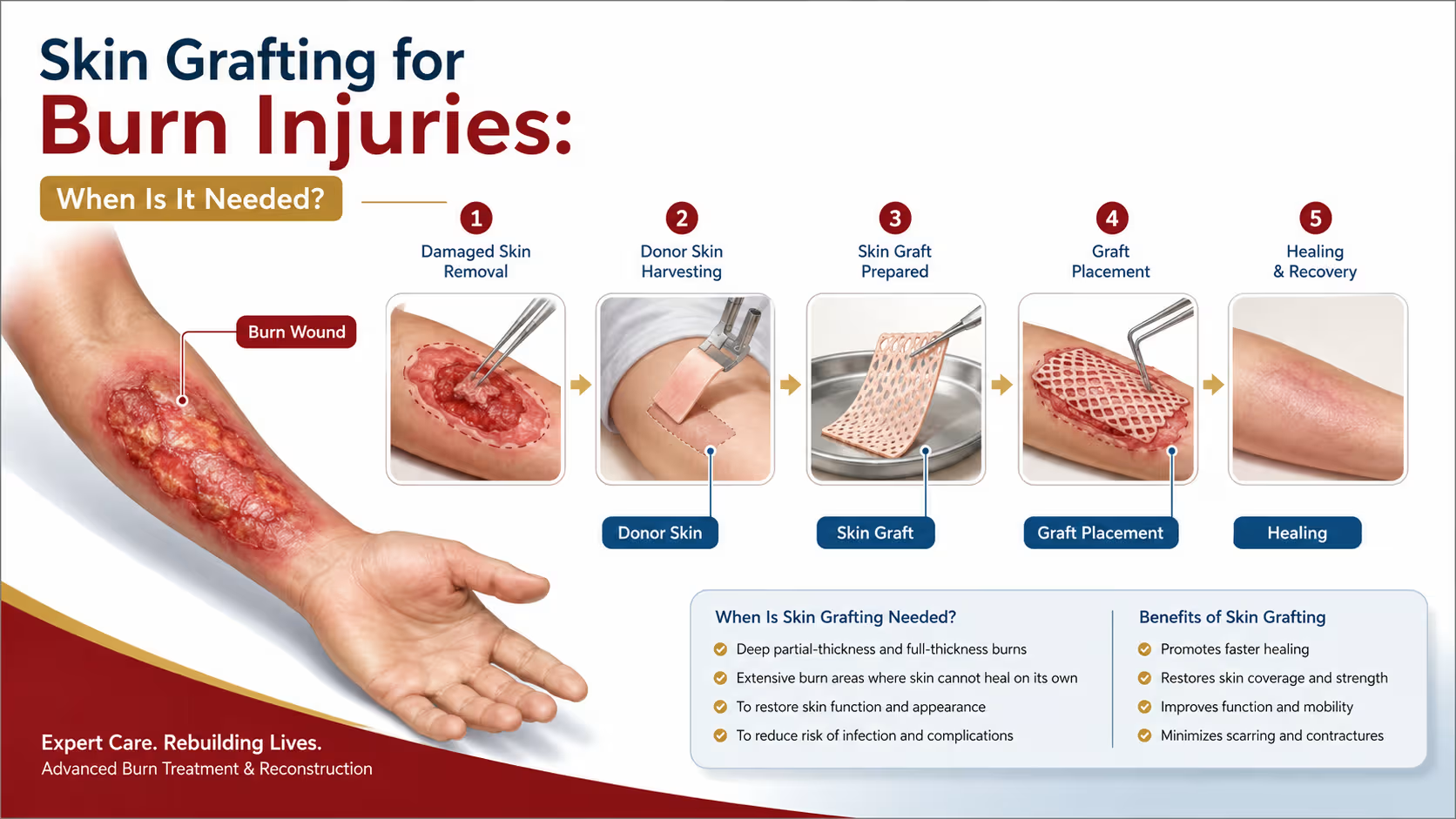
Skin grafting is a reconstructive technique used to replace damaged or missing skin.
There are different approaches to grafting, and the choice depends on the clinical situation.
Split-Thickness Skin Graft
A split-thickness graft contains the epidermis and part of the dermis. It is commonly used to cover larger wounds because donor skin can be harvested from suitable areas.
Full-Thickness Skin Graft
A full-thickness graft contains the epidermis and the entire dermis. It can provide a more substantial skin replacement and may be particularly useful for selected smaller or functionally important areas.
The surgeon determines the appropriate graft based on the patient’s wound characteristics and reconstructive goals.
How Is Skin Grafting Performed?
Although the exact technique varies, the process generally involves several stages.
Step 1: Assessment
The surgeon evaluates the burn wound, depth, size, location, surrounding tissues, and overall health.
Step 2: Wound Preparation
Damaged tissue may need to be removed and the wound prepared to receive the graft.
Step 3: Harvesting the Graft
Healthy skin is carefully taken from a suitable donor area.
Step 4: Placing the Graft
The graft is positioned over the prepared wound and secured using appropriate surgical techniques.
Step 5: Dressing and Monitoring
Special dressings are used to protect the graft while it establishes a blood supply from the underlying wound bed.
Successful graft healing requires careful postoperative care and follow-up.
Skin Grafting Recovery
Recovery after skin grafting varies depending on the size and location of the graft, the patient’s health, and whether other reconstructive procedures are required.
During recovery, patients may need to:
- Keep the graft protected as advised
- Follow dressing instructions carefully
- Avoid unnecessary pressure or friction
- Take prescribed medicines appropriately
- Attend follow-up appointments
- Follow physiotherapy or rehabilitation recommendations
- Protect healing skin from excessive sun exposure
The donor site also requires care because it is itself a healing wound.
Patients should not judge the final appearance of a graft immediately after surgery. Graft texture, colour, and scar appearance can continue to change over time.
Burn Scar Management: Why It Matters
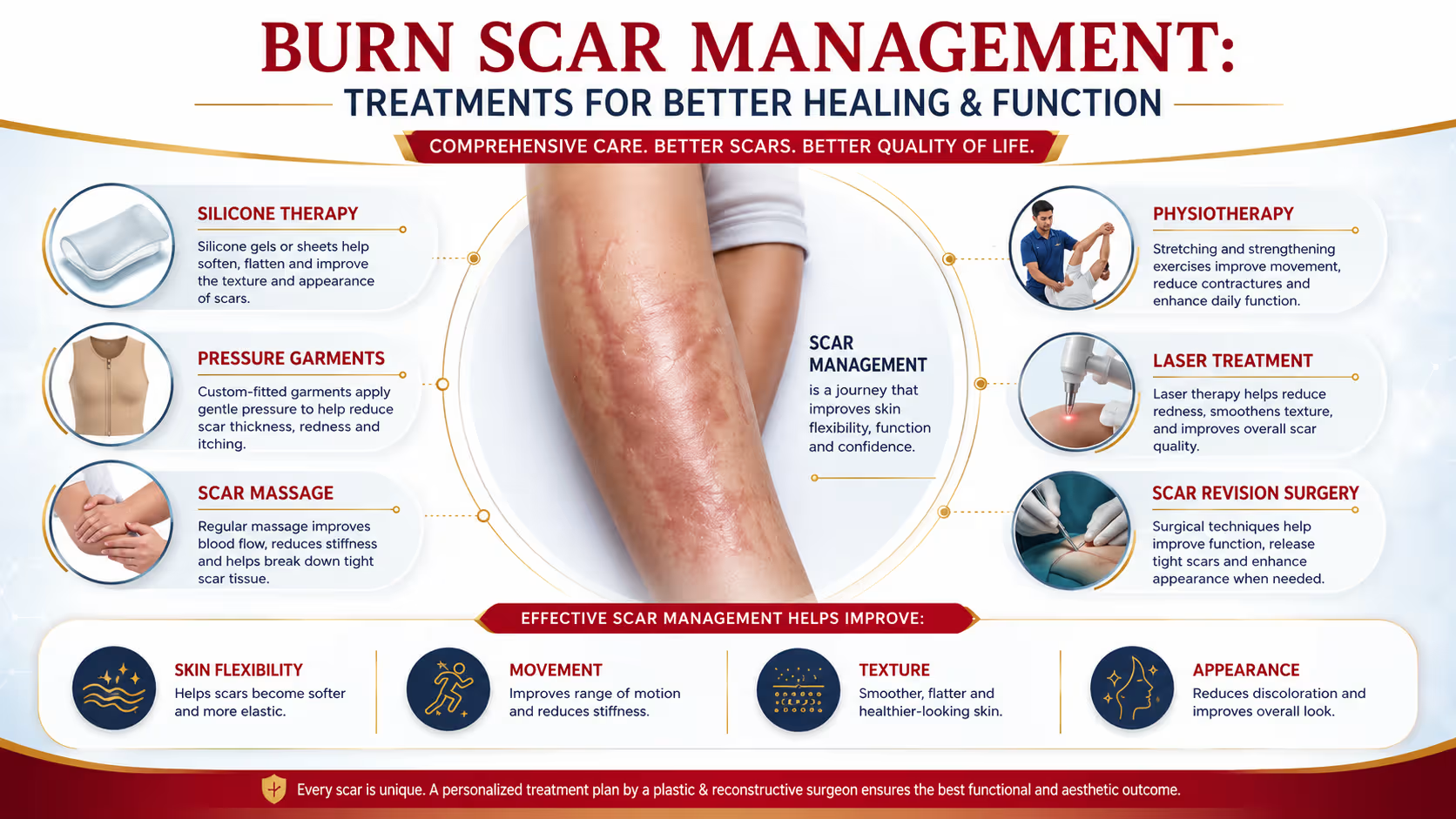
Even after a burn wound closes, the treatment journey may not be over.
Burn scars can become thick, raised, tight, itchy, painful, or discoloured. In some cases, scar tissue can restrict movement and create contractures.
Scar management aims to improve the quality and flexibility of scar tissue and, where possible, reduce functional and cosmetic problems.
Treatment may include:
- Silicone-based scar therapy
- Pressure garments
- Moisturisation and massage when appropriate
- Physiotherapy
- Stretching exercises
- Steroid-based treatments for selected raised scars
- Laser-based scar treatments in appropriate cases
- Surgical scar revision
- Contracture release
- Reconstructive procedures
The correct approach depends on the type, maturity, location, and severity of the scar.
What Are Burn Scar Contractures?
A contracture occurs when scar tissue becomes tight and restricts normal movement.
For example, a burn scar crossing the elbow, wrist, neck, fingers, knee, or another joint may gradually become tighter. This can interfere with everyday activities.
Contractures may require a combination of:
- Physiotherapy
- Stretching
- Splinting
- Scar treatment
- Surgical release
- Skin grafting
- Local or regional tissue reconstruction
Early identification of movement restriction is important because established contractures can become increasingly difficult to manage.
Burn Scar Revision Surgery
Some scars remain prominent even after the burn has completely healed. When conservative scar management does not provide sufficient improvement, scar revision surgery may be considered.
The goal is not necessarily to erase a scar completely. Instead, surgery may aim to:
- Improve scar tightness
- Release restricted movement
- Improve contour
- Reduce functional limitations
- Make a scar less noticeable in selected cases
- Reconstruct areas affected by burn deformity
Scar revision can involve different surgical techniques depending on the location and characteristics of the scar.
Burn Reconstruction of the Face and Neck
Burns affecting the face and neck can have significant functional and aesthetic consequences.
Scarring around the eyelids may affect eye closure. Scarring around the mouth may interfere with eating or facial movement. Neck contractures can restrict movement and cause significant tightness.
Reconstructive treatment may involve scar release, grafting, local tissue rearrangement, or other reconstructive techniques.
Because these areas contain important functional structures, treatment planning needs to consider both appearance and function.
Burn Reconstruction of the Hands
The hands are especially important because even relatively small areas of scarring can affect movement and dexterity.
Burn scars can lead to:
- Finger stiffness
- Joint contractures
- Reduced grip
- Restricted thumb movement
- Tight skin
- Difficulty performing everyday tasks
Treatment may include physiotherapy, splinting, scar management, and reconstructive surgery when required.
A specialist evaluation can help determine the most appropriate approach based on the patient’s functional limitations.
How Long Does Burn Scar Treatment Take?
There is no single recovery timeline for burn injuries.
Healing depends on:
- Burn depth
- Size of the affected area
- Location
- Infection
- Patient’s age and health
- Type of surgery
- Graft size
- Rehabilitation requirements
- Individual scar response
Some scars gradually soften and become less noticeable over months, while others may remain active for much longer. Scar maturation can continue for a year or more.
Regular follow-up allows the treatment plan to be adjusted as the scar evolves.
How Can Burn Scars Be Reduced?
Complete removal of a burn scar is usually not possible. However, appropriate treatment may improve its appearance, texture, flexibility, and function.
Patients should follow their surgeon’s recommendations regarding:
- Scar massage
- Silicone therapy
- Pressure therapy
- Sun protection
- Moisturisation
- Physiotherapy
- Stretching
- Follow-up appointments
It is important not to start scar treatments independently, particularly when the wound is not completely healed.
Why Choose a Plastic Surgeon for Burn Reconstruction?
Plastic surgeons have specialized training in tissue repair, wound coverage, scar management, and reconstruction. Their role in burn care may extend beyond closing a wound.
Reconstructive planning considers:
- Restoration of function
- Protection of underlying tissues
- Mobility
- Scar quality
- Body contour
- Facial features
- Long-term appearance
- Patient-specific expectations
For complex burn injuries, multidisciplinary care may also involve emergency specialists, dermatologists, physiotherapists, occupational therapists, pain specialists, and other healthcare professionals.
Choosing the Best Plastic Surgeon in Lucknow for Burn Treatment
When looking for the Best Plastic Surgeon in Lucknow for burn reconstruction or scar management, patients should focus on appropriate qualifications, experience in reconstructive surgery, surgical facilities, postoperative care, and a treatment plan tailored to the individual.
Dr. Nikhil Puri is a plastic, cosmetic and reconstructive surgeon in Lucknow with qualifications including MBBS, MS and M.Ch (Gold Medalist). As Director of Plastic, Cosmetic & Reconstructive Surgery at Medanta Hospital, Lucknow, he provides evaluation and treatment for a range of reconstructive and plastic surgery concerns.
Patients with burn-related scars, contractures, wounds, or deformities can undergo an individualized assessment to determine whether non-surgical management, skin grafting, scar revision, or another reconstructive procedure may be appropriate.
When Should You Consult a Burn Reconstruction Specialist?
Consider specialist evaluation if you notice:
- A burn wound that is not healing as expected
- Thick or raised scars
- Increasing scar tightness
- Restricted joint movement
- Difficulty using the hands after a burn
- Neck or facial tightness
- Painful or itchy scars
- A healed burn that causes functional problems
- Significant cosmetic deformity following a burn
- Contractures affecting daily activities
Early evaluation does not always mean surgery. In many cases, the most appropriate treatment may be scar care, rehabilitation, observation, or a combination of approaches.
Frequently Asked Questions About Burn Injury Treatment
1. Can all burn injuries be treated with skin grafting?
No. Skin grafting is generally considered when there is significant skin loss and the wound cannot heal adequately on its own. Superficial burns often heal without grafting.
2. How soon can skin grafting be done after a burn?
The timing depends on the depth, size, location, condition of the wound, and overall health of the patient. A reconstructive surgeon evaluates the wound before recommending the appropriate timing.
3. Can burn scars be completely removed?
Burn scars generally cannot be completely erased. However, appropriate scar management or reconstructive surgery may improve their appearance, flexibility, and function.
4. Can burn scar contractures be treated?
Yes. Depending on severity, contractures may be managed with physiotherapy, splinting, scar treatments, surgical release, skin grafting, or other reconstructive techniques.
5. Who should I consult for burn scar treatment in Lucknow?
A qualified plastic and reconstructive surgeon can assess burn wounds, scars, contractures, and deformities and recommend an individualized treatment plan. Dr. Nikhil Puri provides plastic, cosmetic and reconstructive surgery services in Lucknow.
Final Thoughts
Burn treatment does not necessarily end when the wound closes. Deeper burns can leave scars, contractures, restricted movement, and changes in appearance that may require ongoing care.
From wound assessment and skin grafting to scar management and reconstructive surgery, treatment should be tailored to the patient’s injury, healing stage, functional requirements, and long-term goals.
If you or a family member has a persistent burn wound, significant burn scar, contracture, or burn-related deformity, a specialist evaluation can help identify appropriate treatment options.
Dr. Nikhil Puri, a qualified plastic, cosmetic and reconstructive surgeon in Lucknow, can assess complex burn-related concerns and discuss suitable reconstructive and scar-management options based on individual needs.
Medical Disclaimer
This article is intended for general educational purposes and should not replace an examination or personalized medical advice. Severe burns, electrical or chemical burns, inhalation injuries, and burns involving the face, airway, hands, major joints, or extensive areas require prompt medical assessment.