
Hair fall is something almost everyone notices at some point. A few strands on the pillow, in the shower, or on a comb are usually not a reason to panic. Hair naturally sheds as part of its growth cycle. However, when shedding becomes persistent, the hairline starts moving backwards, the scalp becomes more visible, or the overall density gradually decreases, it may be time to look beyond everyday hair care.
For many Indians, hair loss can have several contributing factors, including genetics, nutritional deficiencies, stress, hormonal changes, medical conditions, rapid weight loss, and scalp problems. This is why treating hair fall should not begin with blindly trying oils, supplements or internet remedies.
The first step is understanding why the hair is falling. Once the underlying cause is identified, an appropriate treatment plan can be considered.
For people exploring hair transplants in Lucknow, it is equally important to understand that transplantation is not a universal solution for every type of hair loss. A proper assessment of the hair, scalp, and donor area should come before deciding on any procedure.
Understanding Normal Hair Shedding vs Hair Loss
Hair does not grow continuously at the same speed. Individual follicles move through different stages of a natural cycle.
Anagen Phase
This is the active growth stage. Hair follicles remain in this phase for a prolonged period and produce growing hair.
Catagen Phase
Catagen is a short transition period during which the follicle reduces its growth activity.
Telogen Phase
During this resting stage, the old hair eventually sheds and the follicle prepares for another growth cycle.
Because follicles are at different stages at any given time, some daily shedding is completely expected. Losing roughly 50–100 hairs a day can be normal, although the exact amount can vary.
The concern arises when shedding becomes noticeably heavier or is accompanied by progressive thinning. A widening parting, decreasing ponytail volume, receding hairline, bald patches or increasing scalp visibility may indicate something more than normal shedding.
Temporary shedding and progressive hair loss are also different. Stress, illness, surgery, nutritional problems or major lifestyle changes may trigger temporary shedding, whereas genetic pattern hair loss can gradually reduce hair density over time.
Common Causes of Hair Fall in Indians
Hair loss does not have one single cause. Two people experiencing similar-looking hair fall may actually have completely different underlying problems.
Some common contributors include:
- Genetic or androgenetic alopecia
- Male pattern hair loss
- Female pattern hair loss
- Post-pregnancy or postpartum shedding
- Iron deficiency
- Vitamin D or vitamin B12 deficiency
- Zinc deficiency
- Inadequate protein intake
- Crash diets and rapid weight reduction
- Physical or emotional stress
- Thyroid disorders
- PCOS and hormonal imbalance
- Certain medications
- Dandruff and inflammatory scalp conditions
- Fungal scalp infections
- Significant illness or surgery
For example, someone who suddenly starts losing hair after a period of severe stress may need a very different approach from someone whose hairline has been gradually receding for several years.
Similarly, a person with nutritional deficiency may benefit from correcting the deficiency rather than undergoing a hair restoration procedure.
This is why identifying the cause should come before choosing treatment.
Hair Care & Nutrition: Building the Foundation for Healthy Hair
Healthy hair begins with healthy follicles, and follicles require adequate nutrition to function normally.
For an Indian diet, useful sources of protein and essential nutrients can include:
- Eggs
- Milk, curd and other dairy products
- Dal and other pulses
- Beans and legumes
- Green leafy vegetables
- Seasonal fruits
- Nuts and seeds
- Adequate protein from balanced meals
- Sufficient water intake
Protein is particularly important because hair is primarily composed of a protein called keratin. Very restrictive diets or sudden calorie reduction can affect the body’s normal functions and may contribute to increased shedding.
Crash dieting is therefore not a sensible approach to either weight management or hair health.
It is also important not to assume that every episode of hair fall is caused by a vitamin deficiency. Taking multiple supplements without knowing whether a deficiency exists may be unnecessary. If a nutritional problem is suspected, appropriate clinical assessment can help determine whether testing or supplementation is actually required.

Hair Care Habits That Can Reduce Breakage
Not every strand found on a comb represents hair loss from the follicle. Hair can also break because the shaft has become weak or damaged.
A few simple habits can reduce unnecessary breakage:
- Choose a shampoo according to your scalp and hair needs.
- Keep the scalp reasonably clean.
- Use conditioner mainly on the lengths when appropriate.
- Reduce excessive use of straighteners, curlers and high-heat dryers.
- Avoid repeated chemical treatments when possible.
- Do not routinely wear hairstyles that pull tightly on the hair.
- Handle wet hair gently because it can be more vulnerable to breakage.
- Avoid vigorous towel rubbing.
- Use a gentle brushing technique and avoid unnecessary pulling.
Oiling may make dry hair feel smoother and can improve manageability, but it should not be considered a treatment capable of reversing genetic baldness.
The distinction is important: hair breakage affects the hair shaft, while many forms of hair loss involve changes occurring at the follicle.
Treatment Depends on the Diagnosis
There is no single hair-loss treatment that works for everyone.
Once the likely cause has been established, management may involve one or more approaches, depending on the individual situation. These can include:
- Correcting nutritional deficiencies
- Improving dietary and lifestyle habits
- Topical medical treatments
- Oral medication when medically appropriate
- PRP therapy in selected cases
- Low-level laser therapy
- Hair transplantation for suitable candidates
Medical treatments such as minoxidil or finasteride may be considered in certain types of pattern hair loss, but they are not appropriate for every person. Prescription treatments should be discussed with a qualified healthcare professional rather than started solely on the basis of online advice.
Hair transplantation is different from treatments intended to slow or manage ongoing hair loss. It involves relocating suitable hair follicles from a donor area to areas where restoration is required.
The decision depends on several factors, including the diagnosis, extent and duration of hair loss, age, donor supply, existing hair density, medical history and expectations.
Is Hair Transplant Right for Everyone?
A hair transplant can be a useful hair restoration option for appropriately selected patients, particularly those with pattern hair loss and a suitable donor area.
However, having hair loss does not automatically mean that a transplant is required.
Before considering transplantation, a specialist may assess:
- The pattern and extent of hair loss
- Whether the hair loss is stable or still progressing
- Donor hair availability
- Existing hair density
- The quality of the donor area
- Appropriate hairline design
- Age and expected future progression
- Medical history
- Individual treatment expectations
A transplant generally does not address every possible cause of hair fall. Someone experiencing unexplained, sudden or actively progressive shedding may first need evaluation to identify the reason for the loss.
For those considering a hair transplant in Lucknow, a consultation can help determine whether transplantation is actually appropriate or whether another form of hair-loss management should be considered first.
Early Consultation Offers the Best Chance
Hair loss is often easier to understand when it is assessed before significant progression occurs.
Consider seeking professional advice if you notice:
- Persistent or unusually heavy shedding
- A gradually receding hairline
- Widening of the central hair part
- Increasing visibility of the scalp
- Bald patches
- Sudden hair loss
- Persistent scalp itching or scaling
- Scalp inflammation
- Hair loss occurring along with other hormonal or systemic symptoms
Early assessment can help distinguish temporary shedding from progressive hair loss and may reveal a reversible trigger.
In pattern hair loss, timely evaluation may also be useful for discussing ways to preserve existing hair before considering restoration procedures.
Remember, Every Person’s Hair Journey Is Unique
Hair loss should not be judged by comparing your scalp with someone else’s.
A friend may have excellent results from a particular treatment, while the same approach may not be suitable for another person. Hair density, follicle characteristics, genetics, donor supply, age and the underlying diagnosis all vary.
A personalised assessment may consider:
- Cause of hair loss
- Pattern and severity
- Hair density
- Donor area
- Age
- Medical history
- Lifestyle
- Personal treatment goals
Dr. Nikhil Puri, MBBS | MS | M.Ch (Gold Medalist), Director – Plastic, Cosmetic & Reconstructive Surgery, Medanta Hospital, Lucknow, evaluates hair restoration concerns with attention to the individual’s hair-loss pattern, donor area, density, medical background and expectations.
Depending on the diagnosis, the appropriate recommendation may range from correcting an underlying deficiency to medical management, PRP therapy or considering a hair restoration procedure.
The important point is that the treatment should fit the patient—not the other way around.
Healthy Hair Is Not About Miracle Oils or Viral Remedies
The internet is full of quick fixes for hair loss. Some may improve hair appearance or manageability, but they should not be confused with treatments for the underlying cause.
Myth 1: Frequent shampooing causes hair loss
Washing the hair can make already-loose strands more noticeable because they are released during cleansing. This does not necessarily mean shampooing has damaged the follicles.
The appropriate washing frequency depends on the scalp, hair type and individual needs.
Myth 2: Oiling can reverse genetic baldness
Oil can help improve the feel and manageability of dry hair, but oiling alone cannot reverse androgenetic alopecia.
Genetic pattern hair loss involves changes in follicle behaviour and requires appropriate medical assessment.
Myth 3: Shaving makes hair grow back thicker
After shaving, the newly growing hair can appear darker or thicker because the tip of the hair shaft is blunt. Shaving, however, does not increase the number of follicles or fundamentally change their growth capacity.
Myth 4: Every hair fall problem needs a hair transplant
A transplant is only one possible treatment and is appropriate for selected patients.
Temporary shedding, nutritional deficiencies, certain scalp disorders and several other conditions may require completely different approaches.
Myth 5: Social-media hair remedies work for everyone
Hair loss has multiple causes. A remedy that appears successful in one person may be irrelevant—or inappropriate—for someone with a different diagnosis.
A proper assessment is more useful than repeatedly changing treatments based on online trends.
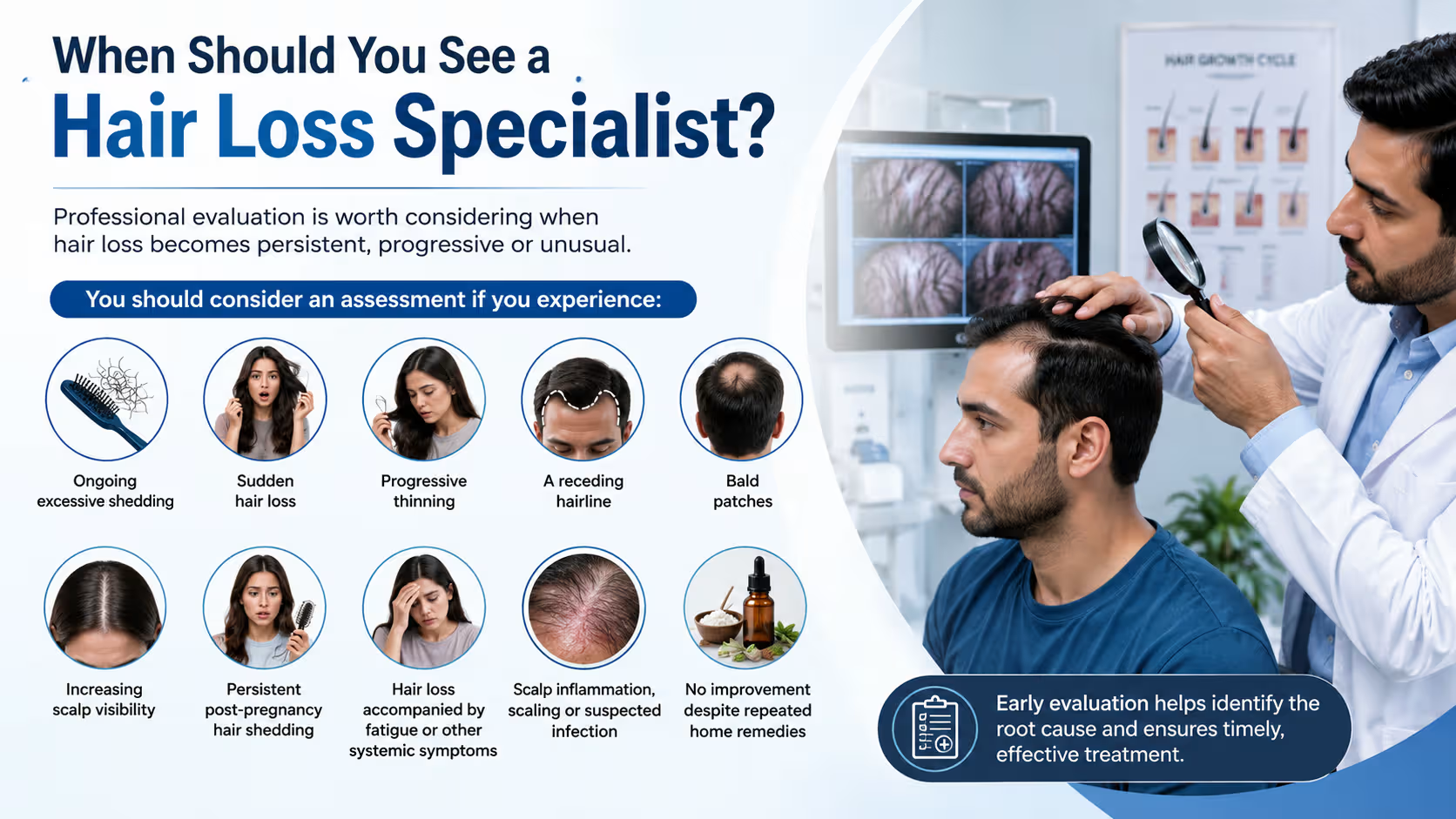
When Should You See a Hair Loss Specialist?
Professional evaluation is worth considering when hair loss becomes persistent, progressive or unusual.
You should consider an assessment if you experience:
- Ongoing excessive shedding
- Sudden hair loss
- Progressive thinning
- A receding hairline
- Bald patches
- Increasing scalp visibility
- Persistent post-pregnancy hair shedding
- Hair loss accompanied by fatigue or other systemic symptoms
- Scalp inflammation, scaling or suspected infection
- No improvement despite repeated home remedies
Depending on the situation, evaluation may involve a detailed medical history, examination of the scalp and hair, assessment of the pattern of hair loss and selected laboratory investigations when clinically indicated.
The purpose is not simply to count how many hairs are being lost. It is to understand why they are being lost.
Frequently Asked Questions About Hair Loss
1. How much hair fall is normal in a day?
Losing around 50–100 hairs per day can fall within the normal range because hair follicles naturally move through growth, resting and shedding phases. However, persistent heavy shedding, visible thinning, bald patches, or a receding hairline deserves professional evaluation.
2. Can hair fall caused by stress grow back?
Yes, stress-related shedding can improve after the underlying trigger is addressed. This type of temporary shedding is commonly associated with a condition called telogen effluvium. Recovery varies depending on the trigger and the individual’s overall health.
3. Do vitamin deficiencies cause hair loss?
Deficiencies involving nutrients such as iron, vitamin D, vitamin B12 or zinc can be associated with hair problems in some people. Inadequate protein intake can also affect hair health. However, supplements should not automatically be taken for every case of hair fall. The suspected deficiency should ideally be assessed before starting supplementation.
4. Is hair transplant suitable for everyone with hair loss?
No. Hair transplantation is generally considered for selected patients based on the cause of hair loss, donor hair availability, existing density, progression of the condition and overall suitability. It is not a treatment for every type of hair shedding.
5. How do I know if I need a hair transplant in Lucknow?
A consultation with a qualified hair restoration or plastic surgery specialist can help determine whether transplantation is appropriate. The assessment may consider your hair-loss pattern, donor area, hair density, progression, medical history, and expectations before a treatment decision is made.
Conclusion
Good hair care is not about finding a miracle oil, buying every supplement advertised online or following the latest viral remedy. Hair health is influenced by genetics, nutrition, hormones, medical conditions, scalp health and everyday habits.
The most sensible approach is:
Correct diagnosis + appropriate treatment + balanced nutrition + healthy hair-care habits + timely professional evaluation.
If you are experiencing persistent or progressive hair loss, understanding the cause should come before deciding on treatment. For individuals considering hair transplant surgery in Lucknow, Dr. Nikhil Puri can assess the pattern of hair loss, donor area and individual requirements to determine whether hair restoration is an appropriate option.
Rather than self-medicating or relying solely on home remedies, seek professional evaluation when hair loss continues or becomes visibly progressive. The right treatment begins with understanding what your hair is actually telling you.
References
- StatPearls. Telogen Effluvium. In: StatPearls [Internet]. Treasure Island (FL): StatPearls Publishing; 2024. Available from NCBI Bookshelf.
- Blume-Peytavi U, et al. Evidence-based (S3) guideline for the treatment of androgenetic alopecia in women and in men. J Dtsch Dermatol Ges. 2018.
- Mysore V, et al. Expert consensus on the management of androgenetic alopecia in India. Int J Trichology. 2019.
- Mysore V, Shashikumar BM. Guidelines on the use of finasteride in androgenetic alopecia. Indian J Dermatol Venereol Leprol. 2016.
- Tamashunas NL, Bergfeld WF. Male and female pattern hair loss: Treatable and worth treating. Cleveland Clinic Journal of Medicine. 2021;88(3):173–182.