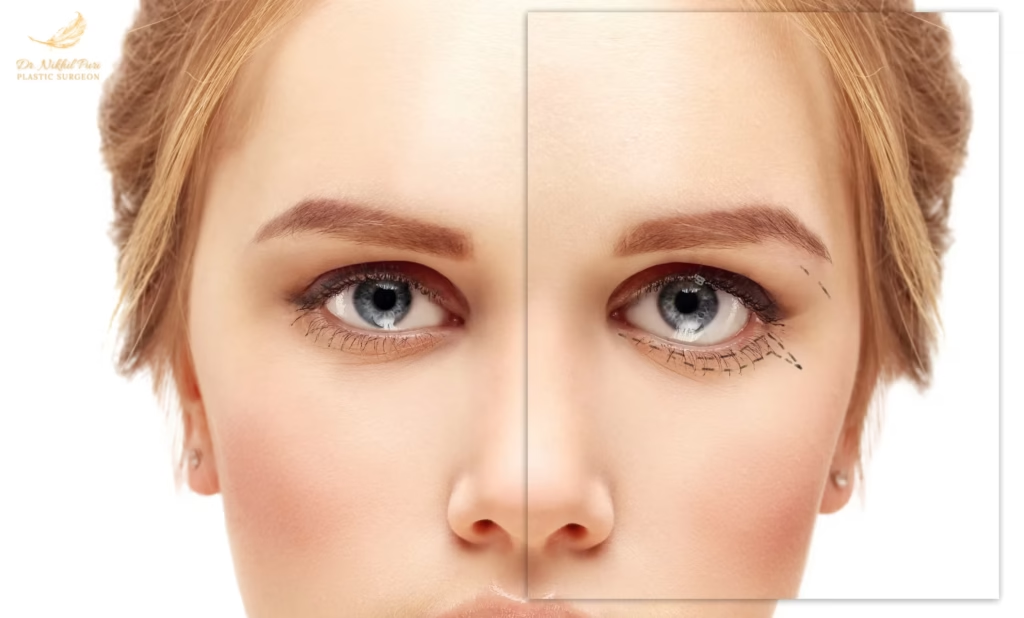
Complete Guide to Eyelid Surgery (Blepharoplasty) in India
Why This Guide Is Different
Most articles show photos and simple checklists. This guide looks deeper.
We focus on how Blepharoplasty behaves over years—how your eyelids age, how fat is preserved, how dryness or brow position affects results, and what actually lasts long-term.
Table of Contents
- What Is Blepharoplasty Really?
- Who Needs Eyelid Surgery?
- When Should You Consider It?
- How to Choose the Right Surgeon
- What Most Blogs Don’t Tell You
- Long-Term Considerations
- Making the Right Decision
1. What Is Blepharoplasty Really?
Simple Explanation
Eyelid surgery isn’t just “removing extra skin.” It’s a complex procedure that considers:
┌─────────────────────────────────────────┐
│   FACTORS IN EYELID SURGERY             │
├─────────────────────────────────────────┤
│ ✓ How eyelids age (uneven process)      │
│ ✓ Fat position (different for everyone) │
│ ✓ Muscle strength                       │
│ ✓ Eyebrow position                      │
│ ✓ Eye moisture/dryness                  │
│ ✓ Natural eyelid crease height          │
└─────────────────────────────────────────┘
Key Point
When you choose a surgeon, you’re choosing their judgment and ability to read these factors.
2. Who Actually Needs Eyelid Surgery?
Beyond “Loose Skin and Puffiness”
Consider surgery if you have ANY of these:
Decision Chart
DO YOU HAVE...                           → WHAT IT MEANS
━━━━━━━━━━━━━━━━━━━━━━━━━━━━━━━━━━━━━━━━━━━━━━━━━━━━━━━━━
Eyebrows always lifted?                  → Your body is compensating
                                           for blocked vision

Tired forehead by evening?               → You're straining to see better

Lower eyelid sagging slightly?           → Changes tear drainage,
                                           causes dryness

Fat bulging unevenly?                    → Genetic or age-related,
                                           needs assessment

Hollow eyes after weight loss?           → Different issue from
                                           "excess skin"
Reality Check
Perfect symmetry is a myth. Natural alignment is the goal.
3. When Should You Actually Consider It?
Think in Timelines, Not Just Symptoms
graph TD
    A[Considering Eyelid Surgery?] --> B{Has the problem been stable for 12+ months?}
    B -->|Yes| C{Have non-surgical methods failed?}
    B -->|No| D[Wait and Monitor]
    C -->|Yes| E{Do you edit photos of your eyes repeatedly?}
    C -->|No| F[Try Non-Surgical Options First]
    E -->|Yes| G{Does screen time worsen symptoms?}
    E -->|No| H[Reassess in 6 months]
    G -->|Yes| I[Good Candidate for Surgery]
    G -->|No| I
Four Key Timing Indicators
| Indicator | What to Look For |
|---|---|
| Stability | Problem unchanged for 12+ months (not fluctuating puffiness) |
| Failed Alternatives | Creams, fillers, lasers haven’t helped structural issues |
| Emotional Signal | You consistently edit eye photos (this matters!) |
| Digital Age Factor | Screen time makes symptoms worse |
4. How to Choose the Best Surgeon
Beyond “Experienced and Certified”
Most blogs give basic checklists. Here’s the real selection framework:
Evaluation Checklist
┌─────────────────────────────────────────────────────┐
│  QUESTIONS TO ASK YOUR SURGEON                      │
├─────────────────────────────────────────────────────┤
│                                                     │
│  ❶ "How do you handle overcorrection or            │
│     hollowness?"                                    │
│     → Confident = calm answer                       │
│     → Novice = redirects the question               │
│                                                     │
│  ❷ "What procedures do you refuse to do?"          │
│     → Experienced surgeons have boundaries          │
│     → Beginners accept everything                   │
│                                                     │
│  ❸ "How many revision cases do you handle          │
│     annually?"                                      │
│     → High revision work = high trust               │
│                                                     │
│  ❹ "What do you check in pre-op evaluation?"       │
│     Must include: dry eye, brow position,           │
│     muscle function, cheek support, tear film       │
│                                                     │
│  ❺ "Are you comfortable saying 'No' to me?"        │
│     → Shows long-term thinking, not sales focus     │
│                                                     │
└─────────────────────────────────────────────────────┘
Pre-Op Evaluation: What MUST Be Checked
        ESSENTIAL CHECKS

    ┌───────────────────┐
    │   Dry Eye Test    │
    └─────────┬─────────┘
              │
    ┌─────────┴─────────┐
    │   Brow Position   │
    └─────────┬─────────┘
              │
    ┌─────────┴─────────┐
    │ Muscle Function   │
    │  (Levator Test)   │
    └─────────┬─────────┘
              │
    ┌─────────┴─────────┐
    │  Cheek Support    │
    └─────────┬─────────┘
              │
    ┌─────────┴─────────┐
    │ Tear Film Quality │
    └───────────────────┘

    If ANY is missing → Find another surgeon
5. What Most Blogs Don’t Tell You
The Uncomfortable Truths
Truth #1: Temporary Dry Eye Worsening
BEFORE SURGERY          AFTER SURGERY (3-6 months)
     Normal         →        May worsen temporarily
     Mild dry eye   →        Can become moderate
     Severe         →        May need postponement
What to do: Get tested beforehand. Plan accordingly.
Truth #2: Fat Misjudgment Risks
| Issue | Result | Fix Difficulty |
|---|---|---|
| Remove too much | Hollow eyes (looks older) | Very difficult |
| Remove too little | No visible improvement | Easier to fix |
| Shift incorrectly | Lumpy appearance | Moderate difficulty |
Key insight: Experience matters more than technique.
Truth #3: Lower Eyelid Surgery Is Risky
┌────────────────────────────────────┐
│   LOWER EYELID RISKS               │
├────────────────────────────────────┤
│                                    │
│   Too tight → Unnatural shape      │
│   Too loose → Sagging continues    │
│   Weak cheek → Unstable results    │
│                                    │
│   ⚠ Lower lid is UNFORGIVING       │
│                                    │
└────────────────────────────────────┘
Truth #4: You May Need Touch-Ups
Timeline: 5-7 years
Reason: Not bad surgery — natural aging continues
Why blogs avoid this: Sounds negative (but it’s honest)
6. Advanced Considerations
The Eyelid-Brow-Cheek Connection
Your eyelids don’t age alone. They age as a unit.
         FACIAL AGING AXIS

    ┌─────────────────────┐
    │       BROW          │ ← If sinking: upper lid
    │    (Position)       │   surgery alone won't
    └──────────┬──────────┘   fix heaviness
               │
    ┌──────────┴──────────┐
    │      EYELID         │
    │     (Surgery)       │
    └──────────┬──────────┘
               │
    ┌──────────┴──────────┐
    │       CHEEK         │ ← If weak support:
    │     (Support)       │   lower lid won't
    └─────────────────────┘   look stable
Fat: Remove or Redistribute?
| Approach | Short-term Look | Long-term Result | Skill Level |
|---|---|---|---|
| Remove | Immediate improvement | Hollow eyes age faster | Beginner-friendly |
| Redistribute | Natural improvement | Smoother aging | Advanced skill |
Why redistribute is better: Hollow eyes look older and tired. Fat retention creates smoother transitions over time.
Real-World Factors That Change Outcomes
YOUR LIFESTYLE                    IMPACT ON SURGERY
━━━━━━━━━━━━━━━━━━━━━━━━━━━━━━━━━━━━━━━━━━━━━━━━━━━━
Work late nights?         →       Swelling lasts longer
Chronic allergies/sinus?  →       More early puffiness
Screen time 6+ hours/day? →       Dry eye recovery changes
Parents have hollow eyes? →       Plan conservatively
7. Making a Decision That Ages Well
The 7-Point Framework
┌────────────────────────────────────────────────┐
│                                                │
│  ✓ Choose a surgeon who thinks in DECADES     │
│                                                │
│  ✓ Ensure they discuss the                    │
│    eyelid-brow-cheek connection                │
│                                                │
│  ✓ Avoid aggressive fat removal                │
│                                                │
│  ✓ Prioritize dryness assessment               │
│                                                │
│  ✓ Ask to understand the PLAN,                 │
│    not just the promised result                │
│                                                │
│  ✓ Prefer natural improvement over             │
│    drastic change                              │
│                                                │
│  ✓ Remember: Follow-up care = 50% of result    │
│                                                │
└────────────────────────────────────────────────┘
What Can Go Wrong (If You Choose Wrong)
graph LR
    A[Wrong Surgeon Choice] --> B[Over-removal of Fat]
    A --> C[Poor Support Assessment]
    A --> D[Ignored Dry Eye]
    A --> E[Wrong Crease Height]
    B --> F[Hollow Eyes - Hard to Fix]
    C --> G[Scleral Show / Rounded Eyes]
    D --> H[Long-term Dryness Issues]
    E --> I[Asymmetry - Difficult Correction]
Why Dr. Nikhil Puri (Context, Not Sales)
This isn’t a sales pitch. Here’s what makes the difference:
| Factor | Why It Matters |
|---|---|
| Conservative Approach | Avoids hollow eyes from over-removing fat |
| Biomechanics Focus | Tiny millimeter mistakes matter at age 50+ |
| Revision Experience | Only confident surgeons take revision cases |
| Digital-Age Awareness | Considers screen strain and modern aging |
| Facial Balance Integration | Thinks about overall face harmony |
Final Thoughts
The Bottom Line
Blepharoplasty in India is advanced. Surgeons here handle high volume and complex cases.
But the difference between “good” and “great long-term results” comes from:
- Judgment (not marketing)
- Conservative planning (not aggressive changes)
- Thinking with you (not selling to you)
Quick Reference: Decision Flow
START: Do I need eyelid surgery?
    ↓
Is the problem stable for 12+ months?
    ↓ YES
Have non-surgical options failed?
    ↓ YES
Does surgeon check all pre-op factors?
    ↓ YES
Are they conservative and honest?
    ↓ YES
Do they discuss long-term outcomes?
    ↓ YES
READY FOR CONSULTATION
FAQs (Blepharoplasty in India)
1. Is eyelid surgery in India safe for people with dry eyes?
Yes, but only after proper tear-film evaluation. If you already have dryness, your surgeon may modify the plan to avoid exposure issues. A good pre-op assessment is more important than the surgery itself.
2. How long do Blepharoplasty results last in India?
Most patients enjoy 7–12 years of improvement. Longevity depends on genetics, digital screen strain, sleep habits, and how much fat was preserved versus removed during the procedure.
3. Can upper and lower eyelid surgery be done together?
Yes, many patients benefit from combined correction. The surgeon decides based on brow position, cheek support, and eyelid biomechanics. Done correctly, combined surgery can give more stable, balanced results.
If you’re seriously evaluating eyelid surgery and want a plan based on your anatomy, lifestyle, and long-term aging pattern, schedule a detailed consultation. Clear decisions come from clear conversations.
For patients looking for expert-level judgement and facial balance planning, consult with the Best Plastic Surgeon in Lucknow – Dr. Nikhil Puri. The right surgeon doesn’t just operate; they guide your choices.
Remember: Good surgery ages well. Great surgery considers your face at 50, 60, and beyond — not just the first selfie.