
John Cena’s fuller-looking hairline in recent public appearances has fueled speculation about a John Cena hair transplant. While unconfirmed, experts believe an FUE (Follicular Unit Extraction) procedure with roughly 3,000–4,500 grafts could produce the natural, denser look he’s shown, based purely on visible changes over time.
Introduction
If you’ve scrolled through social media lately, you’ve probably seen side-by-side photos comparing John Cena’s hairline from a few years ago to how it looks now. The internet loves a good transformation story, and this one has people talking.
For a man whose shaved head became part of his identity, any hint of a fuller hairline is bound to raise eyebrows. Fans, fitness enthusiasts, and even people just curious about hair restoration have started asking the same question: did John Cena get a hair transplant?
We don’t have official confirmation from Cena himself, so nothing here should be read as a verified fact. What we can do is look at the visible changes, understand what’s medically possible, and use that as a jumping-off point to explain how modern hair transplants actually work.
By the end of this article, you’ll understand the likely procedure behind such a transformation, roughly how many grafts a case like this might need, what recovery looks like, and how to think about your own hair loss journey without comparing yourself to a celebrity timeline.
Why Is Everyone Talking About John Cena’s Hair Transplant?
Cena has been a wrestling and Hollywood fixture for over two decades. His bald head was practically a trademark, so any shift in his hairline naturally draws attention.
Recent public appearances reportedly show a noticeably fuller frontal hairline compared to older photos. That alone is enough to spark comparisons and speculation across forums and social platforms.
It’s worth remembering that hair can look different due to lighting, camera angles, hairstyling products, or simply growing it out after years of shaving. None of that confirms a surgical procedure took place.
Still, the pattern of change—especially around the temples and hairline—is the kind of shift that hair restoration specialists often associate with post-transplant results. That’s why this topic keeps resurfacing online.
Before and After: John Cena’s New Look
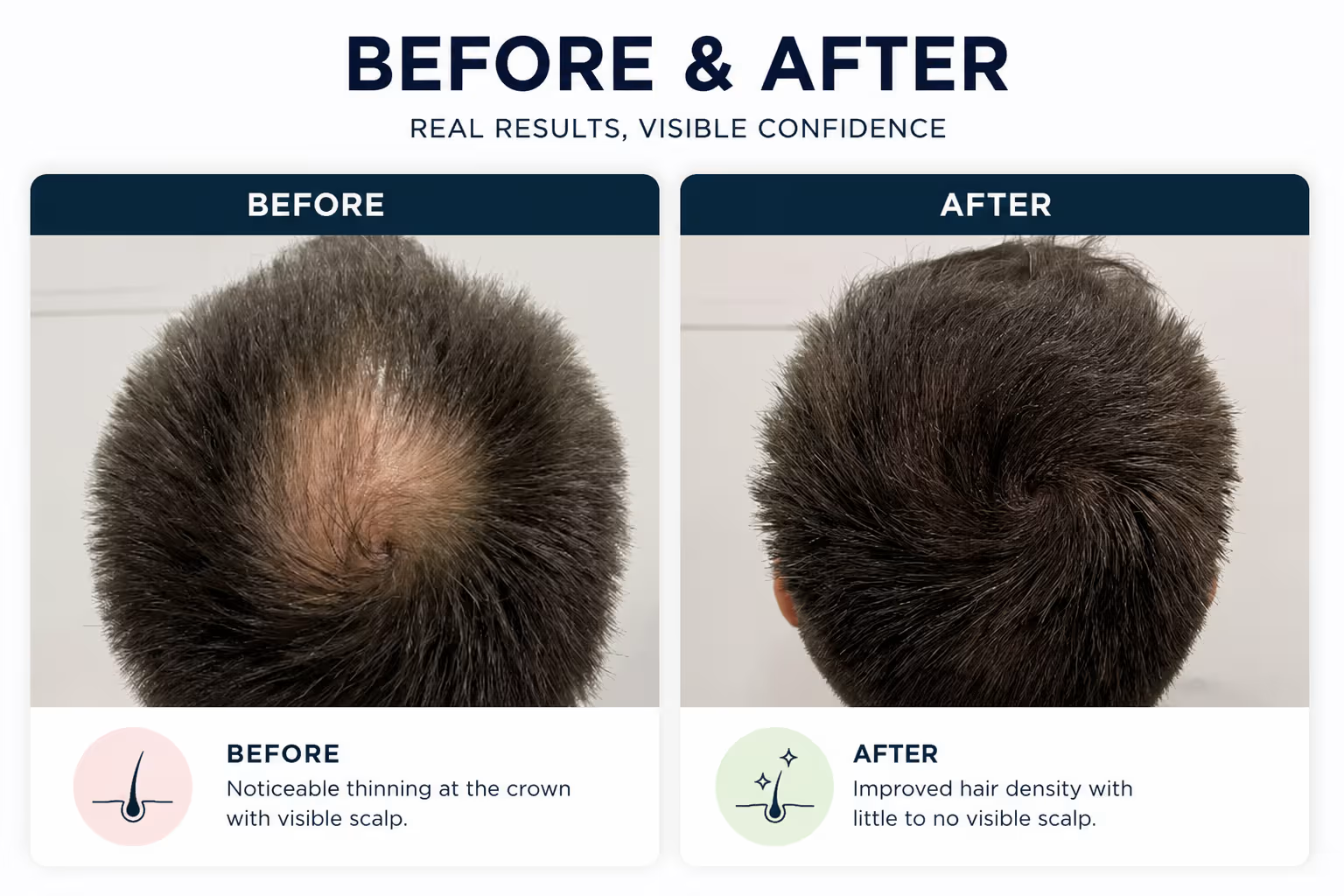
In older photographs, Cena’s hairline shows the kind of recession common in male pattern baldness, particularly at the temples. This is a completely normal pattern affecting a large percentage of men by their 40s.
More recent images reportedly show a lower, denser hairline with better coverage in areas that previously appeared thinner. The change appears gradual rather than sudden, which is actually consistent with how transplanted hair grows in over several months.
A sudden, dramatic difference between two photos might suggest styling or camera tricks. A slow, steady improvement across multiple appearances over a year or more lines up more closely with a genuine transplant recovery timeline.
Again, this is based on public observation, not a medical record. Only Cena and his physician would know the full story.
How Many Hair Grafts Would John Cena Likely Need for Natural-Looking Results?
Graft count depends entirely on the extent of hair loss and the goal of the restoration. For a hairline recession pattern similar to what’s visible in older Cena photos, surgeons typically estimate anywhere from 2,500 to 5,000 grafts.
Here’s a rough breakdown surgeons often use for planning:
- Hairline and temple reconstruction: 1,500–2,000 grafts
- Mid-scalp density: 1,000–1,500 grafts
- Crown coverage (if needed): 1,000–1,500 grafts
If the goal was primarily restoring the hairline and temples, as the visible changes suggest, a figure closer to 3,000–4,500 grafts would likely produce a natural, undetectable result without looking artificially dense.
It’s important to note that more grafts don’t always mean better results. Distribution, angle, and density matter just as much as the total number transplanted.
What Hair Transplant Technique Did John Cena Most Likely Undergo?
Based on the type of change visible—natural-looking density without visible linear scarring—experts believe FUE (Follicular Unit Extraction) is the most probable technique.
FUE involves extracting individual hair follicles from a donor area, usually the back of the scalp, and implanting them one by one into the balding or thinning region. It leaves minimal, scattered scarring rather than a single line.
This matters for someone in the public eye. Unlike FUT (Follicular Unit Transplantation), which leaves a linear scar at the donor site, FUE allows for shorter hairstyles without visible evidence of the procedure.
Given Cena’s shaved-head aesthetic for much of his career, FUE would make far more practical sense than FUT, since it wouldn’t restrict him from returning to a buzzed or shaved look if desired.
Some advanced FUE variations, like Sapphire FUE or DHI (Direct Hair Implantation), are also increasingly popular for hairline work because they allow for more precise angle and direction control, both of which are critical for a natural-looking front hairline.
What Changes Typically Happen After a Hair Transplant Procedure?
Understanding the general recovery and growth timeline helps make sense of why Cena’s transformation, if real, would have unfolded gradually rather than overnight.
Weeks 1–2: The scalp heals from the extraction and implantation sites. Some redness and scabbing is normal and temporary.
Weeks 3–4: A phase called “shock loss” often occurs, where transplanted hairs actually fall out. This is normal and doesn’t mean the transplant failed—the follicles remain in the scalp.
Months 3–4: New, thin hair growth typically begins to emerge from the transplanted follicles.
Months 6–9: Hair becomes noticeably thicker and starts taking on its natural texture and color.
Months 10–12: Final results usually become visible, with full density and natural styling flexibility.
This staged timeline explains why comparison photos of celebrities often span a year or more before a “final” look emerges. If Cena did undergo a transplant, this same biological process would apply to him just as it would to anyone else.
Why Do Many Men Still Hesitate to Treat Hair Loss?
Despite how common male pattern baldness is—affecting roughly two-thirds of men by age 35—many men delay seeking treatment for years.
Part of this comes down to misinformation. Myths about painful procedures, unnatural-looking results, or extremely high costs keep people from even exploring a consultation.
There’s also a social stigma. Some men worry that seeking treatment for hair loss makes them appear vain or insecure, even though it’s no different from addressing any other cosmetic or confidence-related concern.
Cost is a genuine factor too. Many assume hair restoration is unaffordable without realizing how much technology and pricing have evolved, particularly in countries with strong medical infrastructure and lower procedural costs.
Finally, there’s simple procrastination—hoping the hair loss will slow down or stabilize on its own, which for many men, it doesn’t without intervention.
Expert Opinion by Dr. Nikhil Puri: What Makes a Successful Hair Transplant?
According to Dr. Nikhil Puri, an experienced plastic surgeon in Lucknow, the success of any hair transplant—celebrity or otherwise—comes down to several factors that go well beyond the number of grafts used.
“Patient selection is where a good outcome actually begins,” Dr. Puri explains. Not everyone with thinning hair is an ideal candidate, and evaluating donor hair quality, scalp laxity, and the pattern of hair loss upfront prevents disappointing results later.
Realistic expectations matter just as much. Dr. Puri notes that patients who understand the gradual, months-long growth process tend to be far more satisfied than those expecting immediate transformation.
Surgical planning and natural hairline design are where artistry meets medicine. A hairline that’s too straight, too low, or too symmetrical often looks unnatural—small irregularities mimicking real hair growth patterns are what make a transplant undetectable.
Graft survival rate depends heavily on the handling technique during extraction and implantation. Grafts that spend too long outside the body or are handled roughly have lower survival rates, directly impacting final density.
Finally, Dr. Puri emphasizes post-operative care—following medication schedules, avoiding sun exposure, and attending follow-up appointments—as an often-underestimated factor in long-term results.
Frequently Asked Questions About John Cena Hair Transplant
1. What type of hair transplant did John Cena likely undergo?
Based on visible changes and the absence of a linear donor scar, experts believe an FUE-based technique is most likely, though this hasn’t been officially confirmed.
2. How many grafts would John Cena likely have needed, and what does that mean?
Given his hairline pattern, an estimated 3,000–4,500 grafts would likely be needed for natural coverage. Each graft typically contains one to four hair follicles.
3. How much does a hair transplant cost in India?
The hair transplant cost in India generally ranges from around ₹40,000 to ₹1,50,000 or more, depending on the technique, graft count, and clinic reputation.
4. What is the typical hair growth timeline after an FUE hair transplant?
Most patients see initial growth by month 3–4, with substantial thickness by month 6–9, and final results typically visible around month 10–12.
5. Are there non-surgical treatments that can delay or complement a hair transplant?
Yes, options like minoxidil, finasteride, PRP therapy, and low-level laser therapy can help maintain existing hair and support post-transplant results.
6. Is a hair transplant a permanent solution for hair loss?
Transplanted hair from the donor area is typically resistant to balding, making results long-lasting. However, surrounding native hair can continue to thin over time.
7. Who is an ideal candidate for a hair transplant procedure?
Ideal candidates generally have sufficient donor hair density, realistic expectations, and a stable pattern of hair loss confirmed during consultation.
8. How long does it take to recover after a hair transplant?
Initial healing typically takes 7–14 days, while full recovery and natural-looking growth can take up to 12 months.
9. Can a hair transplant provide natural-looking results like John Cena’s?
With proper technique, graft placement, and an experienced surgeon, modern hair transplants can achieve natural, undetectable results similar to what’s visible in Cena’s recent photos.
10. How do I choose the right hair transplant surgeon?
Look for board certification, before-and-after case studies, transparent graft-counting practices, and a clinic offering the best hair transplant in Lucknow or your region with a strong track record of natural results.
Conclusion
Whether or not John Cena actually underwent a hair transplant remains unconfirmed, and readers should treat all comparisons as speculation based on publicly visible changes rather than medical fact.
What this trending topic does offer, though, is a useful entry point into understanding how modern hair restoration actually works—from graft counts and technique selection to realistic recovery timelines.
Every person’s hair loss pattern, donor hair quality, and goals are different. A celebrity comparison might spark interest, but the right next step is always an individual consultation with a qualified specialist who can assess your specific situation rather than a one-size-fits-all approach based on someone else’s results.
Reference
https://people.com/john-cena-reveals-hair-transplant-surgery-after-fan-bullying-11719823
Disclaimer:
This blog is intended for informational purposes only. It does not constitute medical advice. Please consult a licensed cosmetic or plastic surgeon to determine the best treatment options for your specific needs.