The quest for a sculpted, athletic midsection has long been a cornerstone of fitness culture. However, for many individuals, even the most rigorous diet and exercise regimens fail to reveal the underlying muscle definition due to stubborn subcutaneous fat. This frustration has led to the surging popularity of Six-Pack Liposuction, also known as abdominal etching. Unlike traditional liposuction, which focuses on overall volume reduction, this high-definition technique artistically sculpts the abdomen to highlight the natural “six-pack” contours.
With the influence of social media and the increasing accessibility of advanced cosmetic procedures, more men and women are turning to surgery to achieve their aesthetic goals. Yet, one question dominates the consultation room: How long do the results really last? Is this a permanent shortcut to a lifetime of fitness, or does the “six-pack” fade as quickly as a summer tan?
Understanding the longevity of six-pack liposuction requires a deep dive into human physiology, surgical technique, and post-operative commitment. While the procedure offers transformative results, its permanence is a partnership between the surgeon’s skill and the patient’s lifestyle.
“Six-Pack Liposuction can provide long-lasting abdominal definition by permanently removing targeted fat cells. However, maintaining the results depends on factors such as weight stability, diet, exercise habits, and overall lifestyle choices.”
What Is Six-Pack Liposuction?
To understand how long the results last, one must first understand what the procedure actually entails. Six-Pack Liposuction, or abdominal etching, is a specialized form of high-definition (HD) body contouring.
Understanding Abdominal Etching
Traditional liposuction is often compared to “de-bulking”—removing large pockets of fat to create a slimmer silhouette. In contrast, abdominal etching is more akin to “sculpting.” The surgeon uses a delicate cannula to remove fat along the natural lines of the rectus abdominis muscle (the “six-pack”) and the linea alba (the vertical line down the center).
How Six-Pack Liposuction Differs from Traditional Liposuction
In traditional liposuction, the goal is a flat stomach. In six-pack surgery, the goal is a three-dimensional, athletic appearance. The surgeon leaves thin layers of fat over the muscle bellies while deepening the “grooves” between them. This creates the shadow and light effect that characterizes a muscular torso.
Who Is an Ideal Candidate?
This is not a weight-loss surgery. The ideal candidate for six-pack abs surgery is someone who is already close to their ideal body weight (typically within 10-15%) but possesses localized fat that obscures their muscle definition. Good skin elasticity is also crucial to ensure the skin “shrinks” down into the newly created contours.
What Six-Pack Liposuction Can and Cannot Achieve
-
Can: Create the appearance of defined abdominal muscles that were previously hidden.
-
Can: Provide a permanent reduction in the number of fat cells in the treated area.
-
Cannot: Replace the need for the underlying muscle. If there is no muscle volume, the etching may look unnatural.
-
Cannot: Prevent future weight gain in other areas of the body.
How Does Six-Pack Liposuction Work?
The procedure is a blend of medical science and artistic vision. When seeking the Best Liposuction Surgery in Lucknow, patients often consult specialists like Dr. Nikhil Puri, who emphasizes that the success of the procedure lies in the surgeon’s understanding of human anatomy.
Fat Removal Around Natural Muscle Lines
The surgeon begins by “mapping” the patient’s abdomen while they are standing and contracting their muscles. Using these markings as a guide, the surgeon performs liposuction for abs by targeting the superficial fat layer. By selectively thinning the fat over the muscle intersections, the surgeon “reveals” the six-pack that already exists beneath the surface.
Sculpting the Abdominal Area
Precision is key. Removing too much fat can lead to an “operated” or skeletal look, while removing too little results in poor definition. Dr. Nikhil Puri utilizes advanced techniques to ensure the transitions between the “hills” (muscle) and “valleys” (etched lines) look natural and fluid.
Technology Used During the Procedure
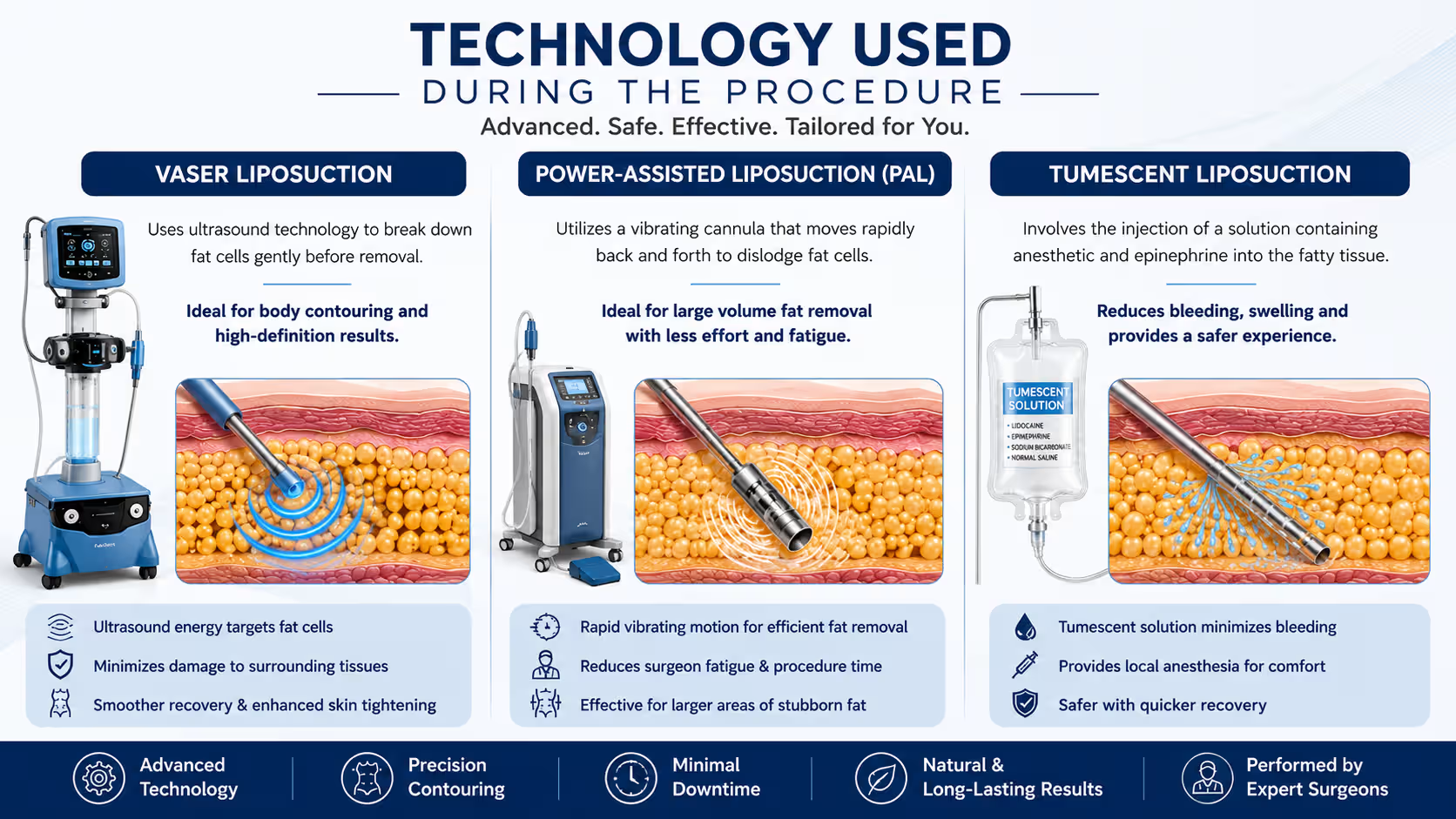
Modern ab etching procedures often utilize:
-
VASER Liposuction: Uses ultrasound energy to emulsify fat, making it easier to remove while preserving connective tissue and promoting skin tightening.
-
Power-Assisted Liposuction (PAL): Uses a vibrating cannula for smoother, more precise fat extraction.
-
Tumescent Liposuction: The gold standard for safety, involving a lidocaine and epinephrine solution to minimize bleeding and bruising.
Why Surgeon Expertise Matters
The abdomen is a complex area with various layers of fat and muscle. Choosing an experienced surgeon like Dr. Nikhil Puri ensures that the etching aligns perfectly with your unique muscular anatomy. An unskilled hand may create “abs” that look crooked or misplaced when the patient moves or sits.
Are Fat Cells Removed Permanently?
One of the most common misconceptions about liposuction is what happens to the fat after the procedure.
What Happens to Removed Fat Cells?
The human body stops producing new fat cells after puberty. When a surgeon performs liposuction abs before and after a procedure, they are physically suctioning out those cells. Once they are gone, they do not “grow back.” In this sense, the reduction in fat cell count is permanent.
Can Fat Return After Liposuction?
While the removed cells are gone, the remaining fat cells in the abdominal area (and elsewhere in the body) still have the capacity to expand. If a patient experiences significant weight gain after surgery, the remaining cells will swell to store the excess energy. This can blur the etched lines and diminish the “six-pack” appearance.
How Weight Gain Affects Results
If you gain a small amount of weight (5–10 lbs), the results usually remain intact. However, a significant weight gain (20+ lbs) can lead to a “softening” of the definition. Interestingly, because there are fewer fat cells in the etched area, the body may store fat in untreated areas—like the back, arms, or thighs—before it accumulates significantly on the etched abdomen.
Understanding Long-Term Body Changes
As we age, our metabolism slows, and skin elasticity decreases. While the fat cells are gone, the skin may sag over time, which can change the look of the etching. This is why maintaining a stable weight and skin health is vital for longevity.
How Long Do Six-Pack Liposuction Results Really Last?
The longevity of six-pack liposuction results is generally measured in decades, provided the patient follows a maintenance plan.
Short-Term Results (0–6 Months)
In the first few months, swelling and fluid retention are common. The “final” look of the six-pack won’t be fully visible until the inflammation subsides and the skin adheres to the new contours.
One-Year Results
At the one-year mark, the results are typically at their peak. The scar tissue has softened, the skin has retracted, and the definition is crisp.
Five-Year Results
For patients who have maintained a stable weight and regular exercise routine, the five-year results remain nearly identical to the one-year results.
Ten-Year Outlook
Long-term success depends entirely on lifestyle. Many patients of Dr. Nikhil Puri report that their results have stayed consistent for over a decade because they treated the surgery as a “head start” rather than a “finish line.”
Expected Results Timeline
| Timeframe | What to Expect | Appearance |
| 1-2 Weeks | Swelling, bruising, and compression garment use. | Bloated, definition hidden. |
| 1-3 Months | Swelling subsides; skin begins to retract. | “Soft” definition emerges. |
| 6 Months | Final contouring complete; scars fade. | Sharp, athletic six-pack. |
| 2-5 Years | Maintenance phase: results stabilized. | Consistent definition. |
| 10+ Years | Long-term outlook: subject to aging. | Durable if the weight is stable. |
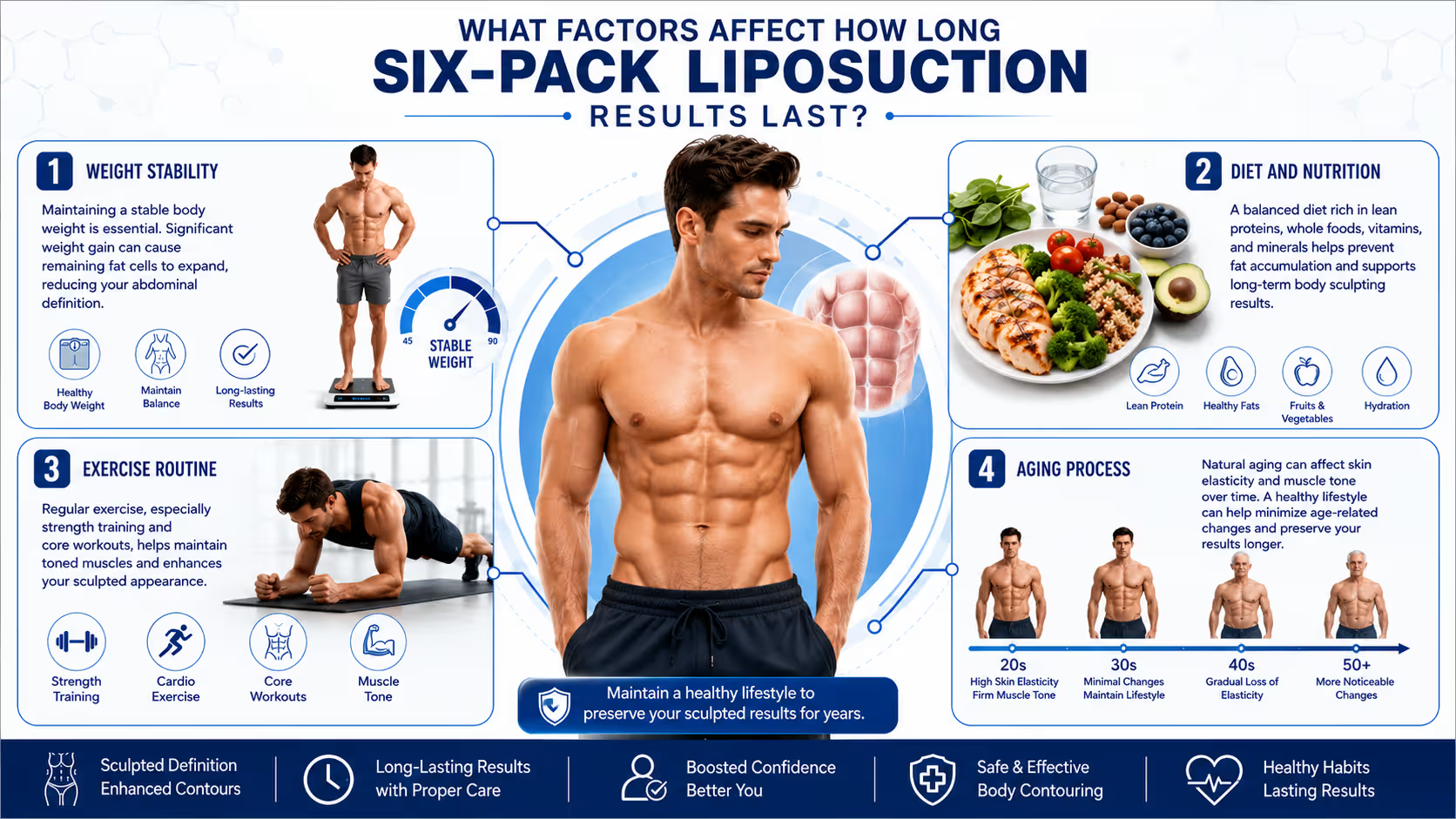
What Factors Affect How Long Results Last?
To ensure your investment in six-pack abs treatment pays off for a lifetime, you must manage several variables.
Weight Stability
This is the single most important factor. Fluctuating weight (yo-yo dieting) puts stress on the skin and allows remaining fat cells to expand and contract, eventually blurring the etched lines.
Diet and Nutrition
A diet high in processed sugars and excessive calories leads to visceral fat (fat around the organs). Liposuction only removes subcutaneous fat (fat under the skin). If you develop visceral fat, your stomach will push outward, ruining the flat, defined look of the six-pack.
Exercise Routine
Liposuction defines the fat around the muscle, but it doesn’t build the muscle itself. To keep the “hills” of the six-pack looking prominent, you must continue core-strengthening exercises.
Aging Process
As we age, we lose collagen and elastin. While the fat removal is permanent, the skin’s ability to stay “tight” over those grooves may diminish.
Factors: Preservation vs. Reduction
| Factors That Preserve Results | Factors That Reduce Results |
| Consistent Weight (+/- 5 lbs) | Significant Weight Gain (15+ lbs) |
| High-Protein, Balanced Diet | High-Sugar, High-Calorie Diet |
| Regular Resistance Training | Sedentary Lifestyle |
| Proper Hydration & Skin Care | Smoking & Sun Overexposure |
| Wearing Compression as Directed | Neglecting Post-Op Instructions |
Step-By-Step Recovery After Six-Pack Liposuction
The recovery phase is critical for the “bonding” of the skin to the muscle, which determines how long the results stay sharp.
Step 1: First Week After Surgery
Patients will experience soreness similar to an intense workout. You must wear a specialized compression garment 24/7. This garment is crucial for minimizing swelling and helping the skin “mold” into the etched grooves. Dr. Nikhil Puri advises light walking to promote circulation but no heavy lifting.
Step 2: First Month Recovery
Most of the bruising disappears. You may begin light cardio. The compression garment is usually worn for 4–6 weeks. During this time, the “etched” lines may feel hard or lumpy—this is normal internal scarring that will resolve.
Step 3: Three-Month Transformation
Swelling is 90% gone. This is often the “wow” phase, where the definition becomes very clear. You can return to full gym activities, including core work.
Step 4: Six-Month Results
The body has fully healed. The skin is tight, and the lymphatic system has cleared all residual fluid.
Step 5: Long-Term Maintenance
Transitioning into a sustainable lifestyle. Yearly check-ups with your surgeon in Lucknow can help monitor the results.
Recovery Timeline Chart
-
Days 1–3: Rest, hydration, light walking.
-
Week 1–2: Return to sedentary work; wear compression.
-
Week 4: Light exercise (cycling, brisk walking).
-
Week 6: Resume weightlifting and core exercises.
-
Month 3–6: Final “reveal” of definition.
Can You Lose Your Six-Pack After Liposuction?
Yes, it is possible to “lose” the visibility of your results, though the surgical changes themselves don’t disappear.
Common Reasons Results Fade
-
Visceral Fat Accumulation: This is the “beer belly” fat. It sits behind the abdominal wall. If you gain this fat through poor diet, your abdomen will protrude, making the etched surface look stretched and less defined.
-
Muscle Atrophy: If you stop exercising entirely, the rectus abdominis muscles will shrink. Since the etching is designed to highlight these muscles, the “pop” of the six-pack will diminish.
-
Pregnancy: For women, pregnancy will significantly stretch the abdominal skin and muscles. While the fat cells removed during abdominal etching surgery are still gone, the structural changes of pregnancy may require a “touch-up” later.
Six-Pack Liposuction vs. Natural Six-Pack Abs
How does a “surgical” six-pack compare to one earned entirely in the gym?
Appearance Differences
A natural six-pack often fluctuates in visibility based on daily water retention and salt intake. A surgical six-pack is “permanent” in its positioning, meaning the definition remains visible even when the patient isn’t flexing.
Maintenance Requirements
Natural abs require maintaining a very low body fat percentage (usually under 10-12% for men). Surgical abs allow for a slightly higher, more sustainable body fat percentage while still maintaining the appearance of definition.
Comparison Chart: Surgical vs. Natural
| Feature | Six-Pack Liposuction | Natural Fitness Abs |
| Effort | Surgical procedure + Maintenance | Years of strict dieting/exercise |
| Visibility | Constant (even when relaxed) | Mostly visible when flexing |
| Fat Percentage | Visible at 15-18% body fat | Usually requires <12% body fat |
| Sustainability | High (with moderate lifestyle) | Hard to maintain year-round |
| Cost | Financial investment | Time and discipline investment |
Common Myths About Six-Pack Liposuction
Myth: Results Are Permanent No Matter What
Reality: The fat cell removal is permanent, but the aesthetic result is subject to your lifestyle. You cannot out-eat a surgical procedure.
Myth: You Never Need Exercise Again
Reality: Exercise is more important after surgery to keep the underlying muscle volume high, ensuring the etching looks natural and athletic.
Myth: Liposuction Is a Weight Loss Procedure
Reality: It is a contouring procedure. If you are significantly overweight, the results of etching will be buried under new fat very quickly.
Myth: Results Appear Immediately
Reality: Due to swelling, most patients actually look “thicker” in the first two weeks. Patience is required for the 3–6 month reveal.
How to Maintain Six-Pack Liposuction Results
To keep your results looking as crisp as the day you left the clinic of Dr. Nikhil Puri, follow these practical tips:
-
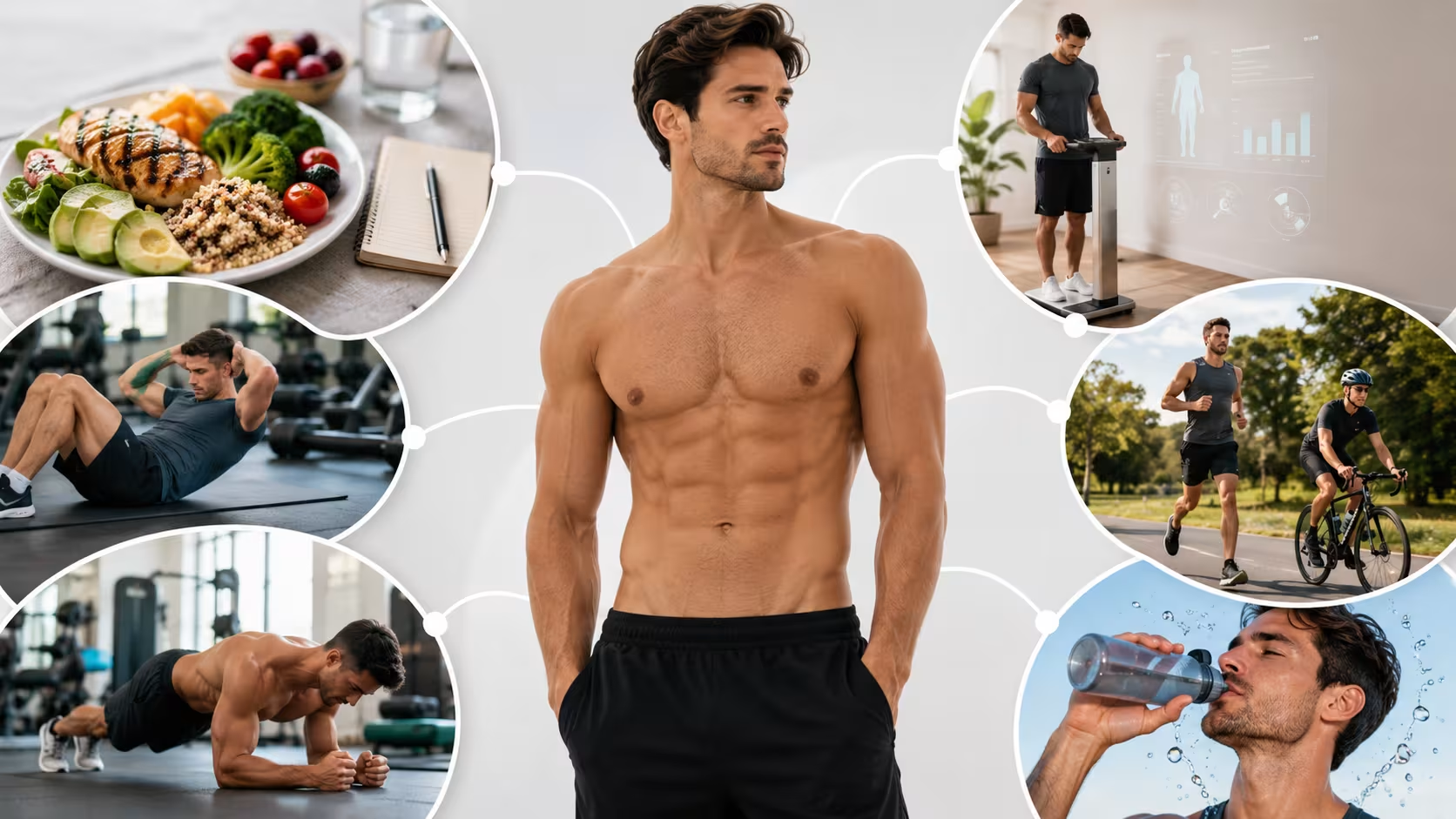
Follow a Balanced Diet: Focus on lean proteins, healthy fats, and complex carbohydrates. Minimize sugar to prevent visceral fat gain.
-
Maintain a Stable Weight: Try to stay within 5–10 pounds of your post-surgery weight.
-
Build Core Strength: Incorporate planks, leg raises, and cable crunches to keep the abdominal wall firm.
-
Stay Physically Active: Aim for at least 150 minutes of moderate aerobic activity or 75 minutes of vigorous activity per week.
-
Hydrate: Water is essential for skin elasticity.
Risks That May Affect Long-Term Results
While rare when performed by experts in the Best Cosmetic Surgery in Lucknow, certain risks can impact longevity:
-
Seroma/Hematoma: Fluid buildup can interfere with how the skin reattaches to the muscle.
-
Asymmetry: If the patient gains weight unevenly, the etching may look off-center.
-
Scar Tissue: Excessive internal scarring (fibrosis) can create a “bumpy” appearance rather than smooth muscle lines.
Who Gets the Best Long-Term Results?
The “Goldilocks” patient for six-pack liposuction longevity is someone who:
-
Has a Body Mass Index (BMI) under 30.
-
Already has a baseline of muscle mass.
-
Does not smoke (smoking severely impairs skin healing and elasticity).
-
Is committed to a long-term fitness lifestyle.
Expert Insights from Dr. Nikhil Puri
According to Dr. Nikhil Puri, “Six-pack liposuction is about refining what you’ve already worked for. It is the ‘finishing touch’ for a dedicated athlete. When patients understand that the surgery is a tool to highlight their hard work, they tend to maintain their results for decades. My goal is to provide a result that looks natural—not just standing still, but in motion.”
What Patients Should Know Before Choosing Six-Pack Liposuction
-
Expectation Management: It will make you look more defined, but it won’t give you the strength of an athlete if you aren’t training.
-
Consultation is Key: A physical exam is necessary to check skin pinch tests and muscle separation (diastasis recti).
When Should You Consider Six-Pack Liposuction?
-
After Plateauing: You’ve hit the gym for years, your diet is clean, but the “lower belly pooch” or lack of definition persists.
-
For Stubborn Fat: You have “genetically stubborn” fat that refuses to budge despite a low body fat percentage.
-
When Realistic: You understand that this is a surgical enhancement, not a miracle cure for an unhealthy lifestyle.
Conclusion
Six-Pack Liposuction can provide life-changing, long-lasting abdominal definition. By artistically removing fat cells to reveal the underlying muscular architecture, surgeons can create a physique that would otherwise be genetically impossible for some.
However, the “really” in “How long does it really last?” depends on the patient. While the removed fat cells are gone forever, the remaining cells and the underlying muscle require care. Lifestyle choices—nutrition, exercise, and weight stability—play the biggest role in maintaining your results. Choosing an experienced surgeon like Dr. Nikhil Puri ensures the procedure is done with the anatomical precision required for a natural, enduring look.
FAQs
1. Is Six-Pack Liposuction permanent?
The removal of fat cells is permanent. However, the visibility of the results depends on you maintaining a stable weight and a healthy lifestyle.
2. How long do six-pack abs from liposuction last?
With proper maintenance, results can last a lifetime. Most patients see consistent results for 10–20 years or more, provided they don’t experience major weight fluctuations.
3. Can fat come back after abdominal etching?
New fat cells will not grow, but existing cells can expand if you gain significant weight. This can hide the etched definition.
4. Do I still need to exercise after six-pack liposuction?
Yes. Exercise maintains the muscle volume underneath the etching, which is what gives the “six-pack” its shape and “pop.”
5. Can I lose my six-pack results over time?
Results only “fade” if you gain significant weight, lose significant muscle mass, or experience extreme skin laxity due to aging.
6. How soon will I see final results?
While you will see an immediate change, final results typically take 3 to 6 months to appear once all swelling has subsided.
7. Is six-pack liposuction better than regular liposuction?
“Better” depends on your goals. For someone wanting an athletic, muscular look, it is superior. For someone just wanting to fit into smaller clothes, traditional liposuction is usually sufficient.
8. Who is a good candidate for six-pack liposuction?
Individuals with a BMI under 30, good skin elasticity, and a baseline of abdominal muscle who are frustrated by stubborn surface fat.
9. Does aging affect six-pack liposuction results?
Aging can lead to skin sagging. However, because the fat was removed, the underlying contour usually remains better than it would have without the surgery.
10. When should I consult a cosmetic surgeon?
Consult a surgeon when you have reached a stable weight and are looking for a permanent solution to localized abdominal fat that hides your muscle definition.
CTA
Six-Pack Liposuction can create impressive abdominal definition, but long-term success depends on maintaining healthy lifestyle habits after surgery. Understanding what affects the longevity of results helps patients make realistic and informed decisions.
If you’re considering body contouring or want to learn whether abdominal etching is right for you, consult Dr. Nikhil Puri for a personalized assessment and expert guidance on achieving safe, natural-looking results through the Best Liposuction Surgery in Lucknow.