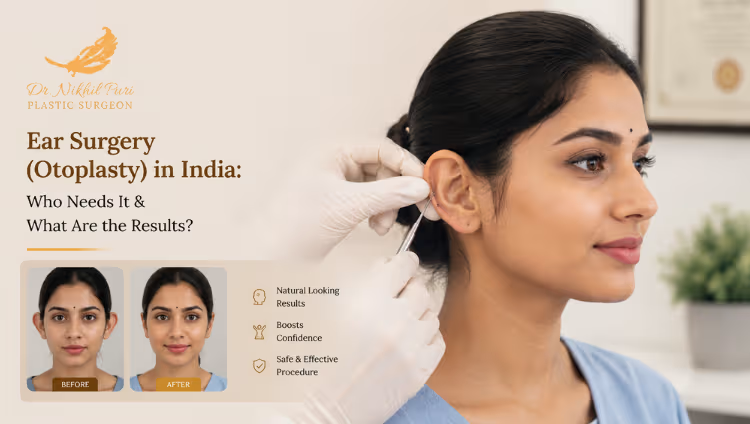
Otoplasty, also known as ear surgery, is a cosmetic or reconstructive procedure used to reshape, reposition, or repair the ears. It is commonly performed for protruding ears, birth defects, ear injuries, or asymmetry. Both children and adults may choose otoplasty to improve appearance, confidence, and overall facial balance. Whether for aesthetic correction or complex reconstruction, the surgery provides permanent, natural-looking results.
Our ears play a huge role in how our face looks. When ears are too large, protrude too far, or are misshapen due to birth or injury, it can affect a person’s self-esteem. This is true for both children and adults.
In India, ear surgery has become a very common and safe procedure. Whether it is to “pin back” prominent ears or to reconstruct an ear after an accident, modern plastic surgery offers life-changing solutions.
If you are looking for the Best Plastic surgeon in Lucknow, it is important to understand what this surgery involves. This guide, featuring insights from Dr Nikhil Puri, will explain everything you need to know about otoplasty and ear reconstruction.
What Is Ear Surgery (Otoplasty)?
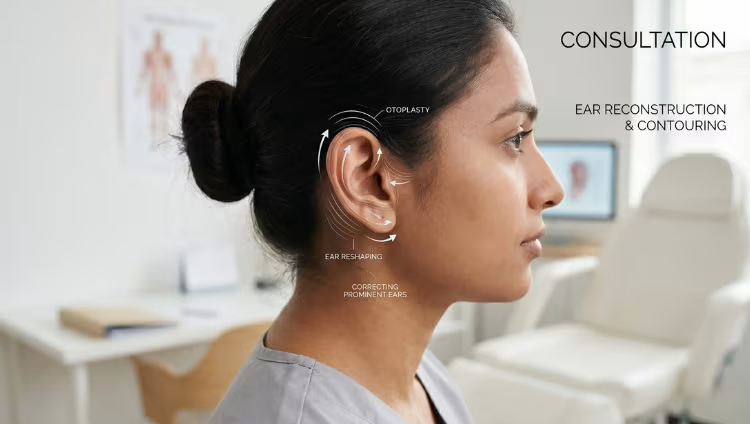
Otoplasty is a surgical procedure that changes the shape, position, or size of the ears. Most people choose this surgery because they feel their ears stick out too much or look “uneven.”
There are two main reasons for this surgery: cosmetic and reconstructive. Cosmetic surgery focuses on making the ears look better. Reconstructive surgery focuses on fixing ears that were damaged or did not form correctly at birth.
The medical ear reconstruction surgery name often depends on the specific problem. For example, “Pinnaplasty” refers to pinning the ears back, while “Auricular Reconstruction” is used when a surgeon needs to build a new ear structure.
No matter the reason, the goal is the same. The surgeon aims to create a natural look that balances the face. This surgery is highly personalized to match each patient’s unique facial features.
Who May Need Otoplasty Surgery?
Not everyone unhappy with their ears needs surgery. However, for many, it is a necessary step toward feeling comfortable in their own skin.
Common reasons people seek ear surgery include:
-
Protruding Ears: This is when the ears stick out significantly from the sides of the head. It is often a source of teasing for children.
-
Macrotia: This is the medical term for ears that are excessively large.
-
Uneven Ears: Sometimes, one ear sits higher than the other or has a different shape.
-
Birth Defects: Some babies are born without an outer ear (Microtia) or with ears that are folded (Stahl’s ear).
-
Injury-Related Damage: Accidents, burns, or sports injuries can tear or deform the ear.
-
Self-Confidence Concerns: Many adults have spent years hiding their ears behind long hair and want the freedom to wear their hair up.
If you or your child falls into these categories, consulting Dr Nikhil Puri can help you understand your options.
Cosmetic Ear Surgery vs Reconstructive Ear Surgery
It is helpful to distinguish between “wanting” a change and “needing” a repair.
Cosmetic Ear Surgery is usually elective. This means the ear functions perfectly, but the patient wants it to look different. The most common cosmetic procedure is ear pinning. It creates a better angle between the ear and the head.
Reconstructive Ear Surgery is more complex. It is often performed to fix a functional or structural problem. For example, if a person is born with a very small or missing ear, the surgeon uses cartilage from the ribs or synthetic materials to “build” a new ear.
Trauma repair also falls under reconstruction. If a portion of the ear is lost due to a dog bite or a car accident, a reconstructive expert can restore the shape.
Types of Ear Surgery Procedures (Comparison Chart)
To make it easier to understand, here is a breakdown of the different types of ear procedures:
| Procedure | Purpose | Who is it for? |
| Otoplasty | Reshaping the ear cartilage | People with large or misshapen ears. |
| Ear Pinning | Bringing the ears closer to the head | People with protruding “bat ears.” |
| Ear Reconstruction | Repairing missing/damaged ears | Patients with birth defects or severe trauma. |
| Ear Lobe Repair | Fixing torn or stretched earlobes | People with heavy earrings or piercings. |
| Trauma Correction | Repairing ears after an injury | Victims of accidents, bites, or burns. |
Each of these procedures requires a different level of skill. When searching for the Best Plastic surgeon in Lucknow, ensure they have experience in both cosmetic and reconstructive techniques.
What Is the Best Age for Otoplasty?
One of the most common questions asked is, “What is the best age for otoplasty?“
For children, the ideal age is usually between 5 and 6 years old. By this age, the ear cartilage is about 90% developed and stable enough for surgery. Performing the surgery early helps the child avoid being bullied at school, which protects their emotional well-being.
However, otoplasty is not just for kids. Adults can get ear surgery at any age. In fact, many adults choose to have it done in their 20s or 30s once they have the financial means.
The main difference is that adult cartilage is firmer and less flexible than a child’s. This means the surgical technique might be slightly different, but the results are just as successful.
How Is Ear Surgery Performed?
Understanding the steps can help ease any anxiety about the procedure. Under the care of Dr Nikhil Puri, the process is streamlined and patient-focused.
-
Consultation: The surgeon examines the ear structure and discusses your goals.
-
Marking and Planning: The surgeon marks the areas where incisions will be made, usually behind the ear,
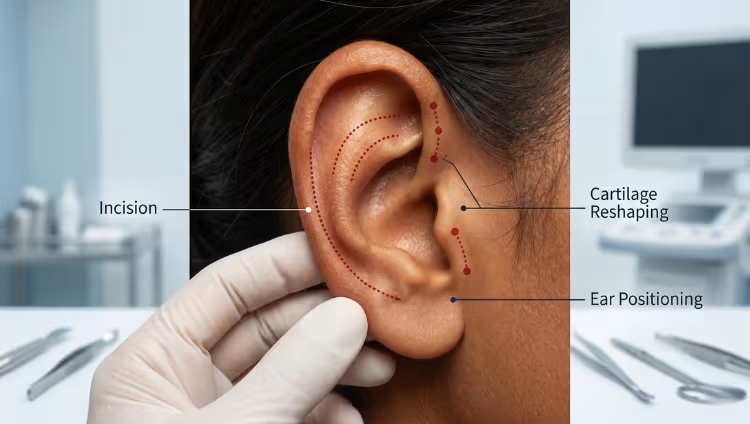 where scars won’t show.
 -
Anesthesia: Children usually get general anesthesia (they sleep), while adults may choose local anesthesia with sedation.
-
Surgical Reshaping: The surgeon may remove small pieces of cartilage or use internal stitches to fold the ear into a new shape.
-
Suturing: The skin is closed with fine stitches.
-
Bandaging: A bulky bandage is wrapped around the head to keep the ears in their new position during the initial healing.
The entire process usually takes about 1 to 2 hours, depending on the complexity.
Otoplasty Recovery Timeline — What to Expect
Recovery is just as important as the surgery itself. Many patients worry and ask, “How painful is otoplasty recovery?“
Most patients describe the feeling as “throbbing” or “tender” rather than sharp pain. This is easily managed with prescribed pain medication.
Otoplasty Recovery Timeline Chart
| Recovery Stage | What Happens | Care Needed |
| Day 1–3 | Initial swelling and discomfort. | Keep your head elevated; wear the heavy bandage. |
| 1 Week | The initial bandage is removed. | Transition to a light headband; return to school/work. |
| 2–3 Weeks | Swelling goes down; bruising fades. | Wear the headband at night to protect the ears. |
| 1–2 Months | Final shape becomes clear. | Resume light exercise; avoid contact sports. |
| 6 Months | Full healing of the cartilage. | The ears are stable, and the results are permanent. |
During recovery, it is vital to sleep on your back. Putting pressure on the ears too early can affect the surgical outcome.
What Results Can Patients Expect After Otoplasty?
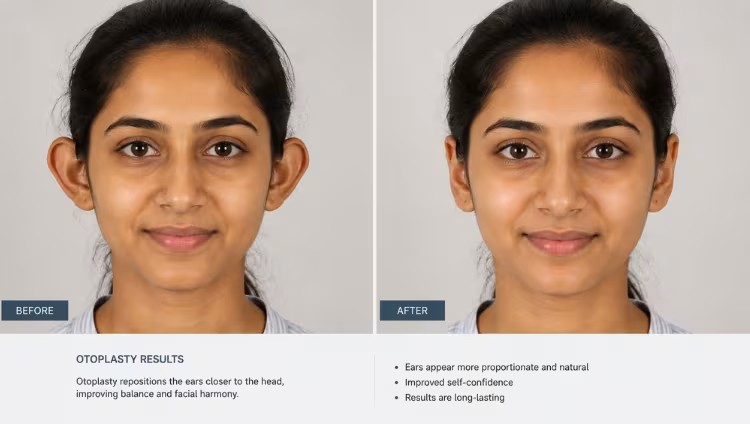
The best results of otoplasty are those that look natural. You shouldn’t look like you’ve had “work done.” Instead, your ears should simply blend in with your face.
Patients can expect:
-
Improved Balance: The face looks more symmetrical.
-
Permanent Changes: Once the cartilage is reshaped and healed, the ears stay in that position forever.
-
Invisible Scars: Because incisions are made in the fold behind the ear, the scars are very hard to see.
-
Increased Confidence: Patients often feel more comfortable wearing their hair short or pulled back.
Dr Nikhil Puri emphasizes that while perfection is the goal, the most important outcome is a happy, confident patient who no longer feels self-conscious about their ears.
Ear Surgery Cost in India — What Affects Pricing?
Patients often ask, “How much does otoplasty cost in India?” or “Ear reconstruction surgery cost in India?“
The cost varies based on several factors:
-
Complexity: A simple ear-pinning costs less than a full ear reconstruction for a birth defect.
-
Surgeon Expertise: A highly experienced surgeon, like the Best Plastic surgeon in Lucknow, may charge more, but this ensures a higher level of safety and better results.
-
Hospital Facilities: The quality of the operating room and nursing care adds to the cost.
-
Type of Anesthesia: General anesthesia is more expensive than local anesthesia.
It is also important to note the ear surgery cost for hearing loss. If the ear surgery is combined with a procedure to improve hearing (like fixing the ear canal), the cost will be higher because an ENT specialist may also be involved.
Risks and Things Patients Should Know Before Surgery
No surgery is without risk. While otoplasty is very safe, being honest about potential issues is part of ethical medical care.
-
Asymmetry: Sometimes ears may not look 100% identical (though no natural ears are perfectly identical).
-
Scarring: While hidden, some people develop thicker scars (keloids).
-
Numbness: It is normal for the ears to feel numb for a few weeks or months.
-
Infection: This is rare but can happen if post-operative care instructions aren’t followed.
-
Overcorrection: If the ears are pinned too close to the head, they can look unnatural (the “plastered” look).
Choosing an expert like Dr Nikhil Puri reduces these risks significantly because of his precise surgical technique and thorough follow-up care.
How to Choose the Right Plastic Surgeon for Ear Surgery
Your face is your identity. You should never compromise on quality when it comes to surgery. Here is what to look for:
-
Board Certification: Ensure the surgeon is a qualified M.Ch or DNB in Plastic Surgery.
-
Experience: Ask how many otoplasties they perform each year.
-
Before-After Gallery: Look at photos of their previous patients to see if their “style” of results matches what you want.
-
Patient Reviews: Check what others are saying about their care and bedside manner.
-
Hospital Safety: Ensure the surgery is performed in a clean, accredited hospital.
Dr Nikhil Puri is widely recognized as the best plastic surgeon in Lucknow, known for his meticulous approach to ear correction and reconstruction. He takes the time to listen to patient concerns and build a realistic plan.
A Real-Life Perspective: The Impact of Otoplasty
Consider the story of “Aryan” (name changed), a 10-year-old boy in Lucknow. Aryan was constantly teased because his ears stuck out. He stopped participating in sports and became very quiet.
His parents consulted Dr Nikhil Puri. After a 90-minute otoplasty procedure and a two-week recovery, Aryan returned to school. The change wasn’t just in his ears; it was in his personality. He started playing cricket again and was much happier. This is the real power of ear surgery—it fixes the spirit as much as the body.
FAQs
Q.What are the best results of otoplasty?
The best results are natural-looking ears that are in proportion with the head. The scars should be hidden, and the patient should feel a significant boost in self-confidence.
Q.How painful is otoplasty recovery?
Recovery is usually mildly uncomfortable rather than severely painful. Most patients take pain relievers for 3–5 days. The most “annoying” part is usually wearing the headband.
Q.How much does otoplasty cost in India?
The cost generally ranges from ₹40,000 to ₹1,50,000, depending on the complexity and the surgeon’s expertise. Reconstructive cases are usually on the higher end.
Q.What is the best age for otoplasty?
For children, age 5 or 6 is best. For adults, any age is fine as long as they are in good health.
Q.Is otoplasty permanent?
Yes. Once the ear cartilage is reshaped and the healing is complete, the results are permanent. The ears will not “spring back” to their old position.
Q.Can adults get ear surgery?
Absolutely. Many of Dr Nikhil Puri’s patients are adults who have wanted the surgery for years. The results are just as successful as they are for children.
Q.Does ear surgery affect hearing?
No. Otoplasty and cosmetic ear surgery only involve the outer ear (the pinna). They do not affect the internal structures responsible for hearing.
What is the ear reconstruction surgery name for birth defects?
It is often called “Auricular Reconstruction” or “Microtia Repair.”
Conclusion
Ear surgery, or otoplasty, is a safe and effective way to change your appearance and boost your confidence. Whether you are considering it for your child to prevent bullying or for yourself to achieve a more balanced look, the results can be life-changing.
In India, you have access to world-class medical care at a fraction of the cost found in Western countries. However, the success of your surgery depends entirely on the skill of your surgeon.
Ear surgery can improve both appearance and self-confidence when performed with proper planning and expert care. Understanding the procedure, recovery, and realistic expectations is essential before making a decision.
Consult Dr Nikhil Puri, a trusted Best Plastic surgeon in Lucknow, for expert guidance on otoplasty and reconstructive ear surgery. Take the first step toward a more confident you today.