Reviewed by Dr. Nikhil Puri | MCh Plastic Surgery | Best Plastic Surgeon in Lucknow
Struggling With Stubborn Fat Despite Diet and Exercise?
Have you been following a healthy diet and exercising regularly, yet still struggle with stubborn fat around your abdomen, thighs, arms, or chin? You’re not alone. Many people find that certain fat deposits remain despite their best efforts, making it difficult to achieve the body shape they desire.
If you’re considering liposuction, understanding the procedure and choosing the Best Plastic Surgeon in Lucknow are two of the most important steps toward achieving safe and natural-looking results. Liposuction is a highly effective body contouring procedure that removes stubborn fat from specific areas of the body, helping improve overall shape and confidence. However, it is important to remember that liposuction is designed for body sculpting—not as a substitute for weight loss.
As the Plastic Surgeon in Lucknow, believes that every patient deserves a personalised treatment plan based on their body type, medical history, and aesthetic goals. A detailed consultation helps determine whether liposuction is the right option and ensures realistic expectations before surgery.
In this comprehensive guide, you’ll learn everything you need to know about liposuction—from how the procedure works and who is an ideal candidate to recovery, risks, benefits, expected results, and the cost of liposuction in India.
Dr. Nikhil Puri’s Clinical Perspective
One of the most common misconceptions I hear during consultations is:
“Doctor, if I undergo liposuction, will I never gain fat again?”
The answer is more nuanced.
Liposuction permanently removes fat cells from targeted areas, but maintaining the results depends on your lifestyle after surgery. Patients who continue eating a balanced diet and stay physically active generally enjoy long-lasting improvements in body contour.
Another important point is that liposuction is not a substitute for weight loss. During consultation, I carefully evaluate a patient’s body composition, skin elasticity, medical history, and expectations before recommending whether liposuction is the most suitable treatment.
Every patient is unique, and the treatment plan should always be individualized.
What Is Liposuction?
Liposuction is a cosmetic surgical procedure that removes stubborn fat deposits from specific areas of the body using a thin hollow tube called a cannula connected to a suction device.
Unlike weight-loss surgery, liposuction focuses on improving body shape and proportions by removing localized fat that has not responded to exercise or diet.
The procedure is commonly performed on:
- Abdomen
- Waist (Love Handles)
- Hips
- Thighs
- Arms
- Back
- Chin & Neck
- Male Chest (Gynecomastia)
Why Does Stubborn Fat Develop?
Many patients believe stubborn fat develops only because of poor eating habits. However, several factors contribute to localized fat accumulation.
These include:
- Genetics
- Hormonal changes
- Pregnancy
- Ageing
- Reduced skin elasticity
- Slow metabolism
- Natural body fat distribution
This explains why even physically active individuals may still struggle with fat deposits in certain body areas.
Is Liposuction Right for You?
Liposuction generally provides the best results for individuals who:
- Are close to their ideal body weight
- Have localized fat deposits
- Have good skin elasticity
- Are physically healthy
- Do not smoke or are willing to stop smoking before surgery
- Have realistic expectations about the outcome
It is important to remember that liposuction enhances body contour—it does not replace healthy eating or regular exercise.
Who Should Avoid Liposuction?
Liposuction may not be suitable for everyone.
Your surgeon may advise against the procedure if you have:
- Severe obesity
- Significant loose or sagging skin
- Uncontrolled diabetes
- Serious heart disease
- Blood clotting disorders
- Unrealistic expectations
A detailed consultation helps determine whether liposuction or another body contouring procedure would be more appropriate.
Areas That Can Be Treated
Abdomen
One of the most commonly treated areas, helping improve waistline definition and remove stubborn belly fat.
Love Handles
Removes excess fat from the sides of the waist to create a more balanced body contour.
Thighs
Both inner and outer thighs can be treated to improve leg proportions and reduce friction while walking.
Arms
Helps reduce excess fat commonly referred to as “bat wings.”
Chin & Neck
Can improve jawline definition by reducing a double chin.
Back
Targets bra bulges and fat rolls to create a smoother back contour.
Types of Liposuction
Different liposuction techniques are available depending on the treatment area and patient requirements.
Tumescent Liposuction
The most commonly performed technique.
A sterile solution containing saline, local anaesthetic, and adrenaline is injected before fat removal.
Benefits
- Less bleeding
- Reduced discomfort
- Faster recovery
- Better precision
Power-Assisted Liposuction (PAL)
Uses a vibrating cannula to break up fat more efficiently.
Often preferred for larger treatment areas.
Ultrasound-Assisted Liposuction (UAL)
Uses ultrasound energy to liquefy fat before removal.
Especially useful for dense or fibrous fat, such as in the male chest or upper back.
Laser-Assisted Liposuction
Laser energy helps loosen fat before suction and may provide mild skin-tightening benefits in selected patients.
Liposuction Procedure: Step-by-Step
Step 1 – Consultation
During your first visit, your surgeon will:
- Review your medical history
- Examine the treatment areas
- Discuss your goals
- Explain realistic expectations
- Recommend the most appropriate technique
Step 2 – Pre-operative Assessment
Before surgery, routine blood investigations and fitness assessments are performed.
Patients may also receive instructions regarding medications, smoking cessation, hydration, and fasting.
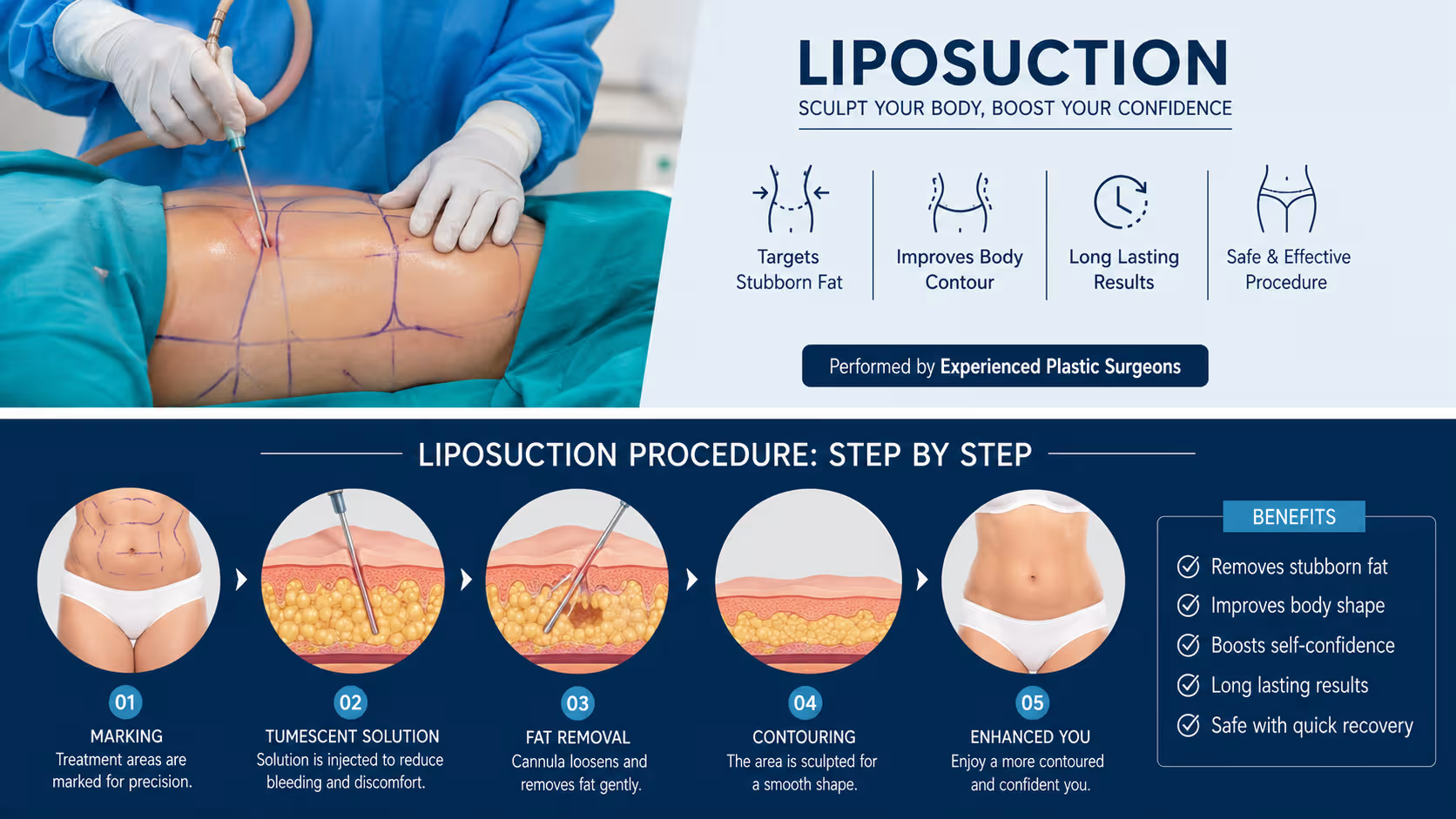
Step 3 – Body Marking
While standing, the surgeon carefully marks treatment areas to guide fat removal during surgery.
Step 4 – Anaesthesia
Depending on the extent of surgery, either local anaesthesia, sedation, or general anaesthesia may be used.
Step 5 – Small Incisions
Tiny incisions, usually only a few millimetres long, are made in discreet locations.
Step 6 – Fat Removal
A cannula is inserted through these small openings.
The fat is gently loosened and suctioned while preserving surrounding tissues for smoother body contours.
Step 7 – Completion of Surgery
The small incisions may be closed with fine sutures or left partially open to allow drainage.
Compression garments are then applied to reduce swelling and support healing.
Step 8 – Recovery
Patients are monitored before discharge.
Depending on the procedure, many patients return home the same day or after a short hospital stay.
What Happens Next?
In the next sections, we’ll cover:
- Recovery timeline (Day 1 to 6 Months)
- Pain management
- Diet after liposuction
- Exercise timeline
- Benefits and possible risks
- Liposuction vs Weight Loss
- Liposuction vs Tummy Tuck
- Cost of Liposuction in Lucknow
- 20+ Frequently Asked Questions
- Expert advice from Dr. Nikhil Puri
Recovery After Liposuction: What to Expect
One of the biggest concerns patients have before surgery is “How long will recovery take?”
Recovery varies from person to person and depends on factors such as the treatment area, the amount of fat removed, skin quality, and overall health. Most patients are surprised to learn that recovery is generally smoother than expected when post-operative instructions are followed carefully.
Recovery Timeline
First 24 Hours
Immediately after surgery, you may experience:
- Mild swelling
- Bruising around the treated area
- Temporary numbness
- Mild fluid drainage from incision sites
- Slight discomfort controlled with prescribed medications
Walking for a few minutes every few hours is usually encouraged to improve blood circulation and reduce the risk of blood clots.
First Week
During the first week:
- Swelling remains noticeable.
- Compression garments should be worn as advised.
- Light walking is encouraged.
- Most patients can perform routine activities at home.
Many patients who have desk jobs can return to work within 5–7 days, depending on the extent of the procedure.
Two to Four Weeks
During this stage:
- Swelling gradually decreases.
- Bruising begins to fade.
- Body contours become more noticeable.
- Patients usually return to most daily activities.
Light exercise may be introduced after approval from your surgeon.
One to Three Months
This is the stage where patients begin appreciating the real outcome of the surgery.
You may notice:
- Better body definition
- Improved waistline
- Reduced swelling
- Better-fitting clothes
- Increased confidence
Three to Six Months
Most swelling resolves during this period.
Final body contours become visible, and the treated areas settle into their natural shape.
Tips for Faster Recovery
Although your body heals naturally, following these recommendations can make recovery smoother.
Wear Compression Garments
Compression garments help:
- Reduce swelling
- Improve skin retraction
- Support healing tissues
- Enhance body contour
Wear them exactly as instructed by your surgeon.
Stay Hydrated
Drinking enough water helps reduce fluid retention and supports the healing process.
Eat a Protein-Rich Diet
Your body requires adequate nutrition for tissue repair.
Include:
- Eggs
- Fish
- Chicken
- Lentils
- Paneer
- Fresh fruits
- Green vegetables
Avoid Smoking
Smoking delays healing by reducing blood flow.
Patients are generally advised to avoid smoking before and after surgery.
Avoid Heavy Exercise Initially
Walking is beneficial.
However, strenuous workouts, heavy lifting, and gym exercises should only be resumed after your surgeon gives clearance.
Attend Follow-Up Appointments
Regular follow-up visits allow your surgeon to monitor healing and identify any concerns early.
Benefits of Liposuction
Liposuction offers several physical and psychological benefits when performed for the right indications.
Physical Benefits
- Removes stubborn fat deposits
- Improves body proportions
- Creates a more defined body contour
- Enhances clothing fit
- Targets fat resistant to diet and exercise
Emotional Benefits
Many patients report:
- Improved self-confidence
- Greater comfort in social situations
- Increased motivation to maintain a healthy lifestyle
- Better body image
While cosmetic surgery can improve appearance, maintaining realistic expectations remains important.
Risks and Possible Complications
Like every surgical procedure, liposuction has potential risks.
Fortunately, serious complications are uncommon when surgery is performed by a qualified plastic surgeon in an appropriate medical facility.
Possible risks include:
- Infection
- Swelling
- Bruising
- Temporary numbness
- Fluid accumulation (Seroma)
- Irregular body contour
- Pigmentation changes
- Delayed wound healing
Rare complications may include blood clots or fat embolism.
Choosing an experienced plastic surgeon and carefully following post-operative instructions significantly reduces these risks.
Can Fat Return After Liposuction?
This is one of the most frequently asked questions.
The fat cells removed during liposuction are permanently eliminated.
However, the remaining fat cells can still enlarge if significant weight is gained after surgery.
For long-lasting results:
- Maintain a healthy diet
- Exercise regularly
- Stay hydrated
- Avoid frequent weight fluctuations
Liposuction should be viewed as a long-term body contouring procedure rather than a substitute for healthy habits.
Liposuction vs Weight Loss
Many people confuse liposuction with traditional weight loss.
| Feature | Liposuction | Weight Loss |
|---|---|---|
| Primary Goal | Body contouring | Reduce overall body weight |
| Removes Fat Cells | Yes | No |
| Targets Specific Areas | Yes | No |
| Surgery Required | Yes | No |
| Best For | Localized stubborn fat | General obesity management |
If your primary goal is to lose a significant amount of weight, lifestyle changes or medically supervised weight-loss options may be more appropriate than liposuction.
Liposuction vs Tummy Tuck
Although these procedures are often discussed together, they address different concerns.
| Liposuction | Tummy Tuck |
| Removes excess fat | Removes excess skin |
| Improves body contour | Tightens abdominal muscles |
| Best for good skin elasticity | Best for loose skin after pregnancy or major weight loss |
| Smaller scars | Longer incision |
In some patients, both procedures may be combined to achieve better results.
How Much Does Liposuction Cost in India?
The cost of liposuction depends on several factors and varies from patient to patient.
These include:
- Number of treatment areas
- Surgical technique used
- Surgeon’s experience
- Hospital facilities
- Anaesthesia charges
- Complexity of the procedure
In India, the cost generally ranges between ₹50,000 and ₹2,50,000 per treatment area. An individual consultation is necessary to provide an accurate estimate based on your treatment plan.
Final Advice from Dr. Nikhil Puri
Liposuction can be a safe and effective option for individuals who wish to improve body contours by removing stubborn fat deposits. However, the best outcomes are achieved when the procedure is performed for the right reasons, after a detailed medical evaluation, and with realistic expectations.
Rather than choosing surgery based only on cost, patients should focus on selecting a qualified plastic surgeon, understanding the procedure thoroughly, and committing to a healthy lifestyle after surgery.
A personalised consultation helps determine whether liposuction is the most appropriate option or whether another body contouring procedure may provide better results.
Frequently Asked Questions (FAQs)
1. Is liposuction a weight-loss surgery?
No. Liposuction is not a weight-loss procedure. It is designed to remove stubborn fat deposits from specific areas of the body to improve body shape and contour. If your goal is significant weight reduction, your surgeon may recommend lifestyle changes or other weight-management options before considering liposuction.
2. How much weight can be removed with liposuction?
The amount of fat that can be safely removed depends on your overall health, body type, and the number of areas being treated. During your consultation, Dr. Nikhil Puri will evaluate your condition and recommend a safe treatment plan based on established surgical guidelines.
3. Is liposuction painful?
During the procedure, you will not feel pain because local or general anaesthesia is used. After surgery, mild soreness, swelling, or discomfort is normal and is usually well controlled with prescribed medications.
4. How long does liposuction surgery take?
The procedure generally takes 1 to 4 hours, depending on:
- Number of treatment areas
- Amount of fat being removed
- Technique used
- Whether additional procedures are performed
5. When can I return to work?
Most patients with desk jobs return to work within 5–7 days. If your work involves heavy physical activity, you may need additional recovery time as advised by your surgeon.
6. When can I start exercising again?
Light walking is encouraged within a day or two after surgery. More strenuous activities such as running, gym workouts, and weight training are usually resumed after 4–6 weeks, depending on your recovery.
7. Will there be scars after liposuction?
The incisions used during liposuction are very small, usually measuring only a few millimetres. Over time, these scars generally fade and become much less noticeable. Proper scar care and following your surgeon’s instructions can further improve their appearance.
8. Are the results permanent?
Yes. The fat cells removed during liposuction are permanently eliminated. However, maintaining your results requires a healthy diet, regular exercise, and stable body weight, as the remaining fat cells can still enlarge with significant weight gain.
9. Can liposuction tighten loose skin?
Liposuction primarily removes fat and is not a skin-tightening procedure. Patients with good skin elasticity often experience natural skin retraction. If you have significant loose skin, procedures such as a tummy tuck or body lift may be more appropriate.
10. Can men undergo liposuction?
Absolutely. Liposuction is commonly performed in men to treat areas such as the abdomen, waist, chest (gynecomastia), chin, and back. Treatment is customised according to individual body structure and goals.
11. Is liposuction safe?
When performed by a qualified and experienced plastic surgeon in an accredited medical facility, liposuction is considered a safe procedure. Choosing the right surgeon and following post-operative instructions play an important role in ensuring a smooth recovery.
12. What is the best age for liposuction?
There is no ideal age. The most important factors are your overall health, skin quality, and treatment goals rather than your age alone. A detailed consultation helps determine whether you are a suitable candidate.
13. Can liposuction treat obesity?
No. Liposuction is not a treatment for obesity. It is intended for individuals who are close to their ideal body weight but have stubborn fat deposits that have not improved with diet and exercise.
14. Can I combine liposuction with other procedures?
Yes. Depending on your goals, liposuction may be combined with procedures such as:
- Tummy Tuck (Abdominoplasty)
- Gynecomastia Surgery
- Breast Reduction
- Fat Grafting
- Mommy Makeover
Your surgeon will advise whether combining procedures is safe and appropriate in your case.
15. How soon will I see the final results?
Initial improvement becomes noticeable as swelling decreases over the first few weeks. Final body contours usually develop over 3–6 months, depending on your body’s healing process.
Key Takeaways
- Liposuction is a body contouring procedure, not a weight-loss treatment.
- It is most effective for removing stubborn fat deposits that do not respond to diet and exercise.
- Choosing a qualified plastic surgeon is essential for safety and natural-looking results.
- Recovery is gradual, and following post-operative instructions is important for optimal healing.
- Maintaining a healthy lifestyle helps preserve long-term results.
Why Choose Dr. Nikhil Puri for Liposuction in Lucknow?
Choosing the right plastic surgeon is one of the most important decisions when considering cosmetic surgery.
Dr. Nikhil Puri is committed to providing personalised treatment plans based on each patient’s anatomy, goals, and expectations. Every consultation includes a detailed assessment, discussion of available treatment options, and realistic guidance regarding expected outcomes.
The focus is not only on removing excess fat but also on achieving balanced body proportions while prioritising patient safety and natural-looking results.
Schedule a Consultation
If you’re considering Liposuction in Lucknow and would like to know whether you’re a suitable candidate, scheduling a consultation is the first step.
During your consultation, Dr. Nikhil Puri will:
- Evaluate your concerns and treatment goals.
- Explain the most suitable liposuction technique for your needs.
- Discuss the expected recovery process and possible outcomes.
- Answer all your questions so you can make an informed decision.
Take the first step towards achieving a more confident and sculpted appearance with expert guidance and personalised care.